

A coastal kitchen doesn’t need to look as though it belongs inside a beach postcard. The most appealing versions are quieter than that. They use sun-softened colors, natural materials, comfortable furniture, and plenty of visual breathing room. You might notice a pale oak cabinet before you notice the blue.
You might see handmade-looking tile, linen, aged metal, or a piece of artwork before you see anything that says “beach.” That is what makes the style so livable. And it explains why coastal kitchens continue to evolve.
Recent design examples are moving beyond the predictable white-and-navy formula, experimenting with warmer woods, green, yellow, earthy neutrals, and more individual interpretations while keeping the easygoing quality that defines the style.
If you’re planning a new kitchen or simply want to change the mood of the one you already have, the goal isn’t to collect coastal accessories. It’s to make the room feel lighter, easier, and more connected to the way you actually live.
What Is a Coastal Kitchen?
A coastal kitchen takes its visual cues from seaside environments without literally recreating one. That usually means a combination of:
- Soft, sun-washed colors
- Natural wood
- Simple cabinetry
- Stone or stone-look surfaces
- Woven materials
- Relaxed seating
- Plenty of daylight
- Subtle texture
- Uncomplicated decoration
- A comfortable relationship between the kitchen and surrounding rooms
The style can be traditional, contemporary, cottage-inspired, or highly polished. A Cape Cod kitchen might use painted cabinetry and classic millwork. A California-inspired room might combine oak, plaster-like walls, and organic textures.
A modern apartment could interpret the idea through flat-front cabinets, pale stone, and a restrained blue-green accent. There isn’t one correct coastal palette. There is, however, a common feeling: light, relaxed and naturally comfortable.
Houzz’s current coastal kitchen galleries demonstrate just how broad the category has become, spanning shaker cabinetry, turquoise, wood worktops, exposed beams, contemporary spaces and traditional layouts.
The First Decision: Which Kind of Coastal Do You Want?
Before choosing paint or tile, decide how relaxed or refined you want the room to be.
Classic coastal
Think:
- White or cream cabinets
- Blue accents
- Marble or pale stone
- Polished or aged metal
- Traditional lighting
- Simple woven details
This is the familiar coastal look, and it has staying power.
Modern coastal
Here the room becomes cleaner and less decorative. You might see:
- Flat-panel or simple Shaker cabinets
- Pale oak
- Large-format stone
- Minimal hardware
- Integrated appliances
- Soft neutral walls
- One strong accent color
This approach works particularly well in newer homes.
Coastal cottage
This version is warmer and more informal. Consider:
- Beadboard
- Painted cabinets
- Butcher block
- Vintage-style hardware
- Open shelves
- Handmade-looking tile
- Comfortable fabric seating
It should feel collected rather than perfectly coordinated.
Organic coastal
This is a useful direction if blue isn’t your thing. The palette leans toward:
- Cream
- Sand
- Mushroom
- Olive
- Sage
- Natural oak
- Terracotta
- Soft brown
The connection to the coast comes from texture and light rather than obvious ocean colors.
Moody coastal
There is no rule saying a coastal kitchen has to be pale. Deep blue, charcoal, green, and even black can work when balanced with warm wood, good lighting, and natural materials. The key is atmosphere, not brightness for its own sake.
Start With the Architecture, Not the Accessories
One of the easiest ways to make a coastal kitchen feel artificial is to ignore the house itself. A room with exposed beams doesn’t need to disguise them. A historic cottage may look better with traditional cabinetry than ultra-modern slab doors.
A sleek apartment may need fewer decorative elements and more emphasis on material contrast. Look at what you already have:
- Ceiling height
- Window size
- Floor color
- Existing wood
- Architectural trim
- Door style
- Adjacent rooms
- Natural light
- View outside
Then ask how coastal design can support those features. This produces a much more believable result than copying a photograph from a completely different type of home.
Build the Color Palette Around One Anchor
You don’t need six coastal colors. Choose one dominant neutral, one supporting color, and one warm material. For example:
Warm white + dusty blue + pale oak or Cream + sage green + natural walnut or Sand + muted aqua + white oak or Soft gray + navy + warm timber
This creates enough contrast to make the room interesting without turning every surface into a separate statement.
Don’t automatically choose bright white.
A stark white can look beautiful in the right light. But if your room faces north, receives limited sunlight, or already contains cool gray surfaces, it can become chilly. A warm white or creamy neutral may create a much more comfortable backdrop.
Let the room’s light choose the color.
Paint samples should be viewed throughout the day. Morning light, afternoon light, and artificial evening light can make the same color appear surprisingly different. That small test is worth doing before ordering gallons of paint.
Blue Is Useful, But It Doesn’t Have to Own the Kitchen
Blue has an obvious connection to coastal interiors, but using it everywhere can make the design feel predictable. Instead, decide where you want the eye to land.
Blue island
A blue island against warm white cabinetry gives you a focal point while keeping the rest of the room bright.
Blue lower cabinets
This can add weight to the bottom half of the room without making the upper portion feel enclosed.
Blue backsplash
Useful when the cabinetry needs to remain neutral.
Blue furniture
A painted stool, bench, or vintage cabinet can introduce color without committing to blue cabinetry.
Blue artwork
This is one of the easiest options for renters or homeowners who don’t want permanent changes. And don’t assume coastal blue has to be turquoise. Dusty blue, slate blue, blue-gray, and deep marine shades can all work.
Give Natural Wood a Real Role
Natural wood is one of the easiest ways to keep a coastal kitchen from becoming cold. It also helps soften the common white-and-blue combination. You can introduce it through:
- Cabinetry
- Island panels
- Floating shelves
- Ceiling beams
- Counter stools
- Flooring
- Cutting boards
- A wooden range hood
- Window trim
The best result usually comes from repeating the same general wood family. For example, pale oak shelves, stools, and an island can make the room feel intentionally connected. Mixing multiple unrelated wood tones can have the opposite effect.
Don’t over-distress the wood.
A few imperfections can create character. But heavily weathered finishes aren’t required to communicate coastal style. Natural grain is often enough.
Choose Cabinetry That Looks Good on an Ordinary Tuesday
A kitchen has to survive cooking, grocery unloading, school lunches, coffee spills, and the occasional forgotten pan. That makes cabinetry more than a style decision.
Shaker cabinets
Shaker doors remain a flexible option because they can move between cottage, traditional, and contemporary coastal interiors.
Flat-panel cabinets
These create a cleaner modern interpretation and work especially well with oak or muted painted finishes.
Glass-front cabinets
A few glass doors can add lightness, particularly in a larger kitchen. But don’t turn every upper cabinet into a display cabinet unless you’re genuinely comfortable maintaining the visual order.
Open shelving
Open shelves can look beautiful. They can also become the place where every random mug in the house ends up. Use them selectively. A shelf near the coffee station or breakfast area can be genuinely useful. A shelf above a cooking zone may require considerably more cleaning.
Choose the Countertop After the Cabinets
This is a practical design sequence that prevents many expensive mistakes. First settle the cabinetry. Then choose the countertop. Only after that should you finalize the backsplash. Why?
Because the countertop usually occupies a large visual area and can contain undertones or veining that influence every material around it.
White quartz
A practical option for homeowners who want a light, calm surface.
Marble
Beautifully natural and full of character, but it comes with maintenance considerations that shouldn’t be ignored.
Quartzite
A natural stone option worth investigating when you want distinctive veining and stone character.
Wood
A timber countertop can add cottage warmth, particularly on an island. The right question isn’t simply “Which countertop looks coastal?” Ask:
How will this surface behave in my kitchen?
Consider cooking habits, cleaning, staining, heat, sealing, and how much natural variation you’re comfortable living with.
Use the Backsplash to Add Texture, Not Noise
The backsplash is where a coastal kitchen can become interesting without becoming busy.
Handmade-look ceramic tile
Subtle variations make the wall feel less manufactured.
Simple subway tile
Still useful when you want the cabinets and lighting to do most of the talking.
Stone
A lightly veined stone backsplash can create a sophisticated, almost architectural effect.
Beadboard
Excellent for a cottage interpretation.
Small-format colored tile
Blue-green, muted aqua, or sage can bring personality into a mostly neutral room. The mistake is choosing a backsplash solely because it looks coastal. Instead, ask whether it works with the countertop, cabinet color, and room size. A backsplash doesn’t need to announce its theme.
Let Lighting Do More Than Look Pretty
Coastal kitchens often depend heavily on natural light, but the kitchen still needs to work after sunset. Use several layers.
Ambient lighting
Provides general illumination.
Task lighting
Helps with food preparation, cleaning,g and cooking.
Decorative lighting
Adds personality above islands, dining areas, or other focal points. A woven pendant can introduce coastal texture. Linen can soften a traditional room. Clear glass can keep a small kitchen visually light. Warm lighting generally helps natural materials feel richer in the evening.
And under-cabinet lighting is one of those details you may barely notice until you don’t have it. Then you wonder why you ever skipped it.
Use Art to Add Personality
Not every coastal kitchen needs shells, coral, anchors, or framed beach signs. Art is often a much better way to introduce personality. Consider:
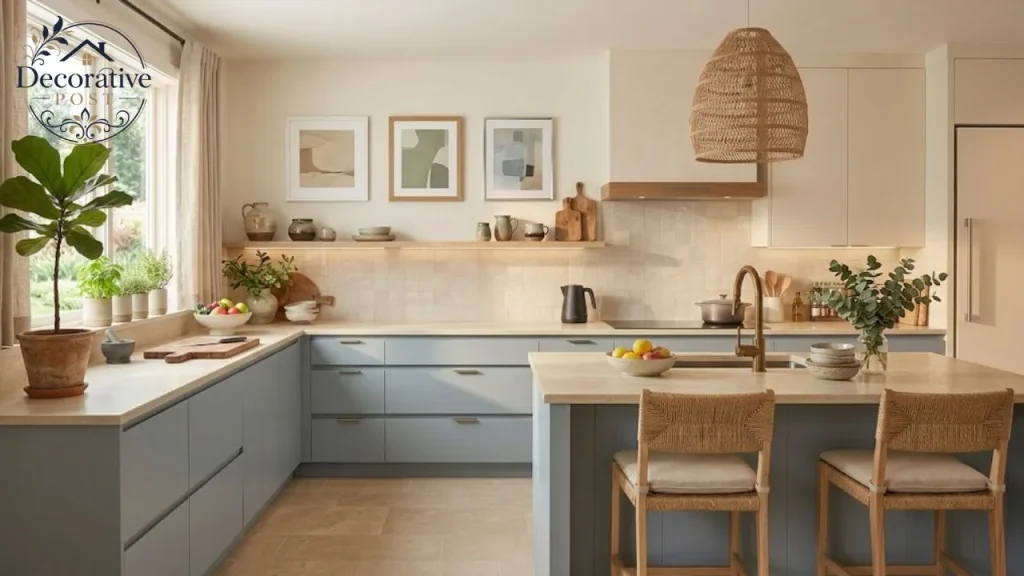
- Abstract artwork in sea-inspired colors
- Botanical prints
- Vintage food illustrations
- Landscape paintings
- Photography
- Local artwork
- Ceramics displayed as functional objects
This also gives you more freedom. You can change artwork far more easily than cabinetry. A kitchen with a calm neutral foundation can accommodate a colorful painting without needing to repaint the entire room. The result feels like someone’s home rather than a themed showroom.
Add Texture Through Things You Actually Use
Decor doesn’t have to be purely decorative. A wooden cutting board can be beautiful and useful. So can:
- Linen tea towels
- Woven baskets
- Ceramic serving bowls
- Rattan stools
- Stoneware pitchers
- Wooden utensils
- A jute runner
- Hand-thrown pottery
This is one reason the style works so well in kitchens. Everyday objects can contribute to the aesthetic. You don’t have to fill empty shelves simply because they are empty.
A Coastal Kitchen Should Still Be Designed for Cooking
This point gets lost in inspiration galleries. A beautiful kitchen photograph doesn’t tell you whether the layout is practical. Before obsessing over finishes, consider the relationship between:
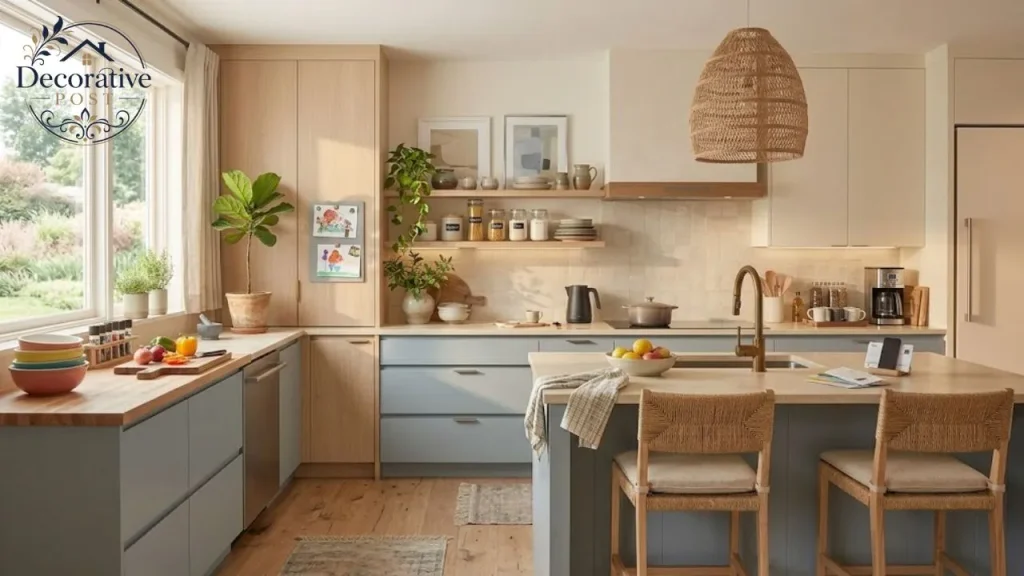
- Refrigerator
- Sink
- Cooktop or range
- Prep space
- Dishwasher
- Pantry
- Waste and recycling
- Small appliances
Houzz’s kitchen guidance similarly emphasizes choosing inspiration images that resemble your actual layout and planning appliance and storage placement before concentrating on decoration. If you frequently cook, protect your main preparation area.
If you entertain, make the island comfortable for people who aren’t cooking. If you have children, think about where snacks, dishes, and everyday items will live. A coastal kitchen shouldn’t merely look relaxed. It should make daily life easier.
Coastal Ideas for a Small Kitchen
Small rooms can actually benefit from the restrained nature of coastal design.
Keep the upper half visually quiet
Light cabinetry or open space above counters can help.
Use one main accent
A blue island may be too much if the room is tiny. A blue backsplash or painted lower cabinet could give you the same effect on a smaller scale.
Choose reflective surfaces carefully.
Light stone and glossy tile can bounce light around the room. You don’t need every surface to shine.
Use vertical space
Tall cabinets, shelves,s and carefully planned storage can make a small kitchen more functional without expanding its footprint.
Don’t overdecorate
This matters more in a small room than anywhere else. A few good objects will always beat twenty small ones.
How to Make a Coastal Kitchen Feel Warm
If your first attempt looks beautiful but somehow feels cold, check the balance. You may have too much:
- White
- Gray
- Gloss
- Metal
- Hard stone
Add:
- Wood
- Linen
- Woven materials
- Warm lighting
- Natural ceramics
- Plants
- A warmer wall color
The goal is not maximum brightness. It’s comfortable brightness. That distinction makes a huge difference.
Can Coastal Style Use Green?
Absolutely. Green is an increasingly useful alternative to the traditional blue palette. Sage, olive,e and muted sea-green shades work particularly well with natural wood.
Green also connects the kitchen to gardens and vegetation, which can make the design feel less dependent on literal ocean imagery. For a room with lots of plants or a garden view, green may actually make more sense than blue.
What About Yellow?
This is where coastal design gets interesting. A small coastal kitchen featured by Homes & Gardens uses buttery yellow cabinetry rather than the expected blue-and-white combination, demonstrating how warmer colors can still support a seaside-inspired atmosphere when the surrounding materials and layout are right.
The lesson isn’t that everyone should paint their cabinets yellow. It’s that coastal doesn’t have to mean blue. If a color works with your home’s light, architecture, and surrounding materials, it can belong in the palette. That gives you far more freedom.
Coastal Kitchen Ideas for a Rental
A rental doesn’t need permanent remodeling to feel more relaxed. Try:
- Removable artwork
- Textiles in soft natural colors
- Woven pendant-style shades where permitted
- Counter stools
- Ceramic accessories
- Wooden cutting boards
- A runner
- Temporary backsplash products where appropriate
- Replaceable cabinet hardware if the landlord allows it
Focus on things you can take with you. A rented kitchen can still have personality.
Coastal Kitchen Ideas on a Budget
You don’t need to renovate everything. Start with the changes that occupy the most visual attention.
Under $100
- New towels
- Wooden boards
- Ceramic pieces
- Artwork
- Small plants
- A simple runner
A few hundred dollars
- New cabinet hardware
- Pendant light
- Counter stools
- Better window treatments
- Larger artwork
- Floating shelves
Larger refresh
- Paint cabinets
- Replace backsplash
- Upgrade lighting
- Change countertop
- Add a new island front
- Improve storage
Full renovation
Only then consider changing:
- Layout
- Cabinet configuration
- Flooring
- Windows
- Island size
- Plumbing
- Electrical
- Appliances
The smartest coastal kitchen isn’t necessarily the one with the most expensive finishes. It’s the one where the money was spent in the right places.
Seven Coastal Combinations Worth Stealing
Warm white + pale blue + oak
A dependable classic with plenty of flexibility.
Cream + sage + natural wood
Softer and more organic.
White + navy + marble
More traditional and dramatic.
Pale oak + white + sea-glass green
Fresh without feeling overly themed.
Cream + terracotta + weathered wood
A warmer coastal interpretation.
White + charcoal + oak
A contemporary, moodier version.
Butter yellow + white + brass
Cheerful, unexpected, and particularly effective in smaller kitchens when balanced carefully.
The Coastal Details That Age Well
If you want a kitchen that still looks good several years from now, prioritize things that aren’t tied to a single trend. Good long-term choices include:
- Simple cabinet profiles
- Natural wood
- Quality stone
- Classic tile
- Comfortable stools
- Good lighting
- Durable hardware
- Neutral walls
- Original artwork
- Useful storage
Then use smaller items for trends. That might mean a new runner, paint color, artwork, or pendant rather than replacing the entire kitchen whenever design tastes shift.
What to Avoid
Too many nautical symbols
One can be charming. A collection can become a theme.
Excessive distressed finishes
Coastal does not mean everything has to look weather-beaten.
A single shade of blue everywhere
Variation is good, but too many competing undertones create visual confusion.
Cold white everywhere
If the room lacks sunlight, balance it with warmth.
Decorative clutter
The relaxed look depends partly on empty visual space.
Ignoring function
No amount of rattan or beautiful tile can fix an awkward kitchen layout.
Copying someone else’s house
A coastal kitchen should respond to your architecture, light,t and lifestyle.
How to Make a Coastal Kitchen Feel Like Your Home
This may be the most important part. Don’t ask: “What accessories make a kitchen coastal?” Ask: “What materials, colors, and objects make this particular home feel lighter and more relaxed?” If you collect pottery, display it.
If you love artwork, make the walls part of the design. If your family gathers around the island every evening, make the island comfortable.
If you cook constantly, prioritize prep space. If you rarely use formal dining furniture, don’t sacrifice valuable kitchen space for it. A good design style should make room for your habits rather than asking you to change them.
The Best Coastal Kitchens Don’t Look Like They Were Ordered as a Set
There is a reason the most convincing examples often have a slightly collected quality. A new cabinet may sit beside an old wooden stool. A polished countertop may meet handmade-looking tile. A modern pendant might hang over a traditional island.
Artwork may introduce a color that doesn’t appear anywhere else. That small amount of tension keeps the room alive. Perfect coordination can make a kitchen feel manufactured. A little contrast makes it feel lived in.
A Simple Formula for Designing Your Own Coastal Kitchen
If you’re staring at an empty Pinterest board and have no idea where to begin, use this order:
Decide on the mood.
Classic, modern, cottage, organic, or moody.
Study the natural light.
Morning, afternoon,n and evening.
Choose your dominant neutral.
Warm white, cream, sand, greige, or another quiet foundation.
Pick one accent color.
Blue, green, navy, aqua, yellow, or even a warmer tone.
Choose your main wood.
Pale oak, walnut, reclaimed timber,r or another compatible species.
Select the countertop.
Let its undertone guide the backsplash.
Add the backsplash.
Keep its visual strength proportional to the rest of the room.
Plan lighting.
Ambient, task, and decorative.
Add texture.
Linen, woven materials, ceramics, and natural wood.
Finish with personality.
Art, plants, books, serving pieces, and objects you actually like. This order keeps the big decisions connected.
What Makes a Coastal Kitchen Feel Expensive?
It usually isn’t one spectacular material. It’s proportion. The cabinet color works with the floor. The countertop works with the backsplash. The lighting suits the ceiling height. The island doesn’t overwhelm the room. The hardware doesn’t fight with the faucet.
The accessories have room around them. Nothing looks accidental. That kind of cohesion is what gives even a relatively simple kitchen a polished appearance.
A Final Test Before You Commit
Before buying the last accessories, stand at the kitchen entrance. Look at the whole room. Ask yourself:
Where does my eye land first?
If the answer is the artwork, island, window, or beautiful cabinetry, you’re probably on the right track. If the answer is a collection of shells on the counter, the room may be trying too hard.
Remove three things. Then look again. Good coastal design has breathing room. It should feel like somewhere you want to linger, not somewhere you need to keep styling.
Final Thoughts
A successful coastal kitchen isn’t defined by an ocean-colored cabinet or a shelf full of seashells. It’s defined by how the room behaves visually. Light moves through it. Natural materials soften it. Color gives it personality. Good storage keeps clutter under control.
Lighting makes it useful at night. Artwork makes it personal. And the whole space feels comfortable enough that you don’t worry about whether everything is perfectly styled. That is the version of coastal design worth bringing home.
You can live hundreds of miles from the water and still create that feeling. You just need to design for the feeling rather than decorate for the theme.
Frequently Asked Questions
Can a coastal kitchen be colorful?
Yes. Coastal kitchens can use muted green, sage, butter yellow, aqua, dusty blue, or even deeper navy. The key is keeping the overall palette balanced rather than relying on several strong colors at once.
What flooring works best in a coastal kitchen?
Light or medium natural wood, pale stone, limestone-look tile, and understated porcelain tile can all work well. Choose flooring based on durability and the existing architecture rather than color alone.
Do coastal kitchens need an island?
No. A coastal kitchen can work beautifully without an island. In smaller spaces, a peninsula, compact worktable, or movable island may provide better circulation.
Is brass hardware suitable for a coastal kitchen?
Yes. Brushed or aged brass can add warmth to white, cream, blue, and green cabinetry. If you prefer a cooler appearance, polished or brushed nickel is another versatile choice.
How can I make a dark kitchen feel more coastal?
Use warm light-colored cabinetry, layered lighting, pale countertops, natural wood, reflective backsplash materials, and restrained accessories. Avoid relying on cold white paint alone.
Can dark countertops work in a coastal kitchen?
Yes. A dark countertop can provide useful contrast, particularly with light cabinetry and natural wood. Keep other dark elements limited so the room doesn’t lose its airy quality.
What type of kitchen hardware suits coastal design?
Simple hardware in aged brass, brushed nickel, stainless steel, bronze, or understated black can work. Choose a finish that complements the faucet, lighting, and other metal elements.
How do I make a coastal kitchen look less generic?
Use artwork, unusual ceramics, natural wood, vintage pieces, locally inspired colors, or furniture with personal meaning. The more the room reflects your actual taste, the less it will resemble a staged beach house.