

Prices are national averages taken from the guides named in the text. They differ a lot between sources and between regions, so use them to sanity-check written quotes, not to replace them.
The short answer
The small bathroom remodeling cost depends mostly on one question: do you keep the layout, or change it? Keep the plumbing where it is and a small bathroom can cost a few thousand dollars. Move fixtures and replace everything, and it can pass $15,000 or more.
One guide splits small-bathroom projects into three tiers: a budget refresh at $2,000 to $5,000, a mid-range remodel at $6,000 to $15,000, and a premium remodel at $15,000 to $30,000 or more. Another, based on national survey averages, puts a40-0 to 60-square-foot bathroom at about $12,700 to $14,800.
The gap between those numbers is the whole story of this article. This guide explains why the figures differ, what each part costs, and where the money can be saved.
Why the numbers you read online disagree
A search for the small bathroom remodeling cost produces answers from under $5,000 to over $25,000. All of them can be right, because they describe different projects.
Some guides price a cosmetic update: paint, a new vanity, a toilet, and a floor. Others price a full gut with new plumbing, tile, a shower and a new layout.
Regions differ too. NerdWallet reports a bathroom remodel averaging about $20,000 in Los Angeles and just under $12,000 in Brooklyn and Dallas.
Methods differ. One calculator-style guide quotes full remodels near $650 per square foot, while a survey-based guide puts the typical range at $70 to $250 per square foot. That is a very wide spread.
Small rooms are the reason. A bathroom has expensive fixtures and trades packed into a small area, so the cost per square foot is high even when the total is modest.
When you read a number, ask what it includes. Does it cover demolition, permits, labour, a shower and waterproofing? A low figure that leaves those out is not a low price.
The three tiers, in plain terms
A tier is just a level of ambition. Choosing one early keeps the budget realistic.
Budget refresh. The guide that tiers small bathrooms describes this as paint, new fixtures, a prefab vanity,y and budget flooring such as luxury vinyl plank. The layout, tub,ub and plumbing stay in place. It lists $2,000 to $5,000, and $3,200 to $4,800 for a 5-by-8-foot room.
Mid-range remodel. A new vanity with a quartz or solid-surface top, porcelain tile, a new toilet, and updated lighting, again in the same layout. That guide lists $6,000 to $15,000, and $7,200 to $11,200 for a 5 by 8 room.
Premium remodel. Layout changes, natural stone, a frameless walk-in shower, custom cabinetry, heated floors,s and smart features. It lists $15,000 to $30,000 or more.
A survey-based guide using a 50-square-foot room gives a different picture: $8,478 to $10,883 for a basic refresh, $14,609 to $19,040 for mid-range and $27,492 to $35,808 for high-end.
Those totals sit higher than the first guide, especially at the low end. The honest answer is that a refresh costs somewhere between about $3,000 and $11,000 depending on region and what counts as a refresh.
What a small bathroom costs by size
Size matters less than scope, but it helps to see the pattern.
| Room size | Estimated cost (survey-based guide) |
|---|---|
| 40 to 60 sq ft (small) | $12,695 to $14,845 |
| 70 to 90 sq ft (medium) | $15,920 to $18,070 |
| 100 to 120 sq ft (large) | $19,166 to $21,295 |
| 130+ sq ft (primary suite) | $22,370 to $24,715 |
The step between sizes is modest. Going from a small bathroom to a large one adds about $6,000, because the expensive items, such as the shower, the vanity, and the plumbing, are needed at any size.
That is why small bathrooms feel pricey per square foot. A shower costs about the same in a small room as in a large one.
For a 5 by 8 foot room, which is 40 square feet, the tiered guide lists $11,200 to $15,000 or more for a full gut renovation.
Another source with a cosmetic and full-remodel split for a 5-by-7-foot room puts a mid-range full remodel at just over $24,000 and a cosmetic one at about $8,000, though that page’s pricing date is older and its per-square-foot rate looks high.
Treat the $24,000 figure as the upper end of what a full remodel can reach, not the typical result.
Cost of each part, installed
These are the line items that make up the total. They come from two guides, and I give the range from each.
| Item | Budget | Mid-range | Premium |
|---|---|---|---|
| Vanity with sink and faucet | $525 to $1,200 | $1,200 to $2,940 | $3,000 to $5,000+ |
| Toilet | $105 to $630 | $630 to $1,200 | $1,500 to $5,000 |
| Bathtub replacement | $400 to $1,500 | $2,000 to $4,500 | $5,000 to $9,400 |
| Walk-in shower, custom tile | $210 to $2,000 | $4,000 to $7,000 | $7,875 to $15,000+ |
| Floor tile | $525 to $1,200 | $1,200 to $2,500 | $2,500 to $3,700 |
| Wall tile or tub surround | $200 to $800 | $1,000 to $3,000 | $3,000 to $8,000 |
| Countertop | $100 to $300 | $400 to $900 | $900 to $2,000 |
| Exhaust fan | $50 to $150 | $150 to $300 | $300 to $500 |
| Lighting, per fixture | $32 to $150 | $150 to $400 | $400 to $800+ |
| Faucets and showerhead | $50 to $200 | $200 to $500 | $500 to $1,200 |
The survey-based guide gives some different averages: tile $1,326, flooring $1,114, plumbing $5,545, shower installation $8,044, cabinetry and vanity $2,929, and electrical $456.
Plumbing and the shower are the two largest items in that list. They are also the items that grow most if walls need to be opened.
A third guide notes the vanity, cabinets, and countertop usually take 20 to 25 percent of the budget, and the exhaust fan is about $375 installed.
For help choosing the vanity itself, the small bathroom vanity guide covers sizes and layouts for tight rooms.
Labour: the biggest line you cannot see
Labour is usually the largest part of the bill, and it hides inside lump-sum quotes.
Two guides put labour at 40 to 65 percent of the total, and a third says 45 to 65 percent. NerdWallet’s range is 40 to 65 percent. In a small bathroom with many trades, expect the upper half.
Hourly rates add up. One guide lists plumbers at $85 to $175 per hour, electricians at $60 to $145, painters at $30 to $60, and tile installers at $12 to $22 per square foot.
It also notes that many contractors were booking 8 to 12 weeks out, which affects your timeline more than your price.
Specialised trades cost more than general carpentry. A plumber or an electrician on a small bathroom can account for a large share of the bill, because the work is concentrated and detailed.
This is also why scope matters. Every trade you call in adds a visit, and every visit has a minimum charge.
Hidden costs that break budgets
The line items above are what you plan for. The items below are what surprise people.
Demolition and removal. One guide lists $390 to $2,100, and says dumpster rental of $160 to $630 per day is often extra. NerdWallet gives demolition at $1,000 to $2,300.
Permits. Ranges run from $100 to $1,000 across the guides, and one gives $400 to $750 or more. Permits are generally needed for plumbing, electrical, windo,w or structural work, and a contractor can often pull them.
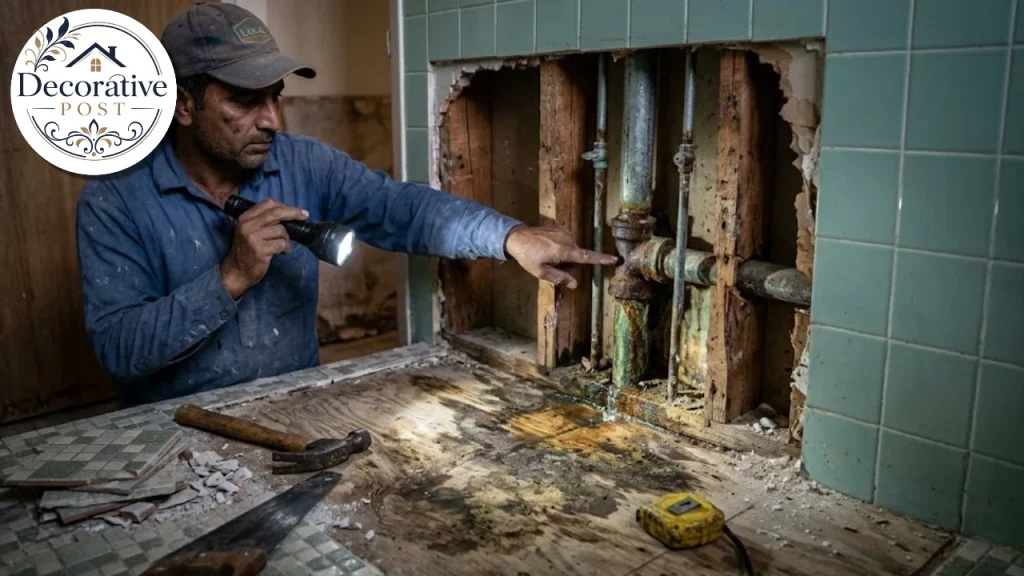
Water damage. NerdWallet puts repairs at $3.75 to $7 per square foot, and another guide says damage is found in about 30 percent of remodels. Rot behind an old tub or shower is the classic case.
Waterproofing. A shower needs it, and one guide puts installed shower waterproofing at $1,400 to $2,000. Skipping it is a false saving.
Reworking the layout. NerdWallet says a new floor plan, with reworked plumbing and electrical, adds about $5,000. A different guide says keeping the existing plumbing layout saves $3,000 to $10,000.
Design help. A consultation can cost $200 to $400. It is optional but can prevent expensive mistakes.
The common thread is that surprises come from behind the walls. You cannot see them until demolition.
How much to set aside as a cushion
The guides agree on a simple rule: reserve 15 to 20 percent of the budget for the unexpected.
The survey-based guide recommends 20 percent and reports that about one in three homeowners spent more than planned, often on plumbing upgrades or hidden water damage. Another guide lists contingency at 15 to 20 percent.
On a $10,000 project, that is $1,500 to $2,000 you should not count as spendable. If you do not use it, you have money left over, which is a good problem.
Do not spend the cushion on upgrades. Treat it as protection against rot, a corroded pipe,e or a failed subfloor. A realistic small bathroom remodeling cost always includes this reserve.
If the quote already looks tight against your budget, reduce the scope before you start. It is easier to remove a feature than to find money halfway through.
Timing, seasons and scheduling
When you remodel affects price and stress as much as what you choose.
Contractors book out. One guide reports many were scheduling 8 to 12 weeks ahead, so a quote can arrive long before work starts. Prices in a written quote may expire, so ask how long it holds.
Order materials early. Tile, vanities,es and fixtures can take weeks to arrive, and a missing item stalls the whole job because the trades depend on one another.
Plan the sequence. Demolition comes first, then plumbing and electrical rough-in, then waterproofing, tile, fixtures and paint. A delay at any stage pushes the rest back.
Allow for inspections. If a permit applies, inspectors visit at set stages, and the schedule depends on their availability.
A realistic plan for the small bathroom remodeling cost includes the cost of living without the room. If it is your only bathroom, budget for a short stay elsewhere or a temporary arrangement.
Where the money goes in a typical mid-range project
Seeing the shares helps you decide where to compromise.
Labour takes about half. The rest splits between the shower or tub, the vanity, flooring and wall tile, plumbing fixtures, and small items such as lighting, the fan, and accessories.
The shower or tub area is usually the biggest single block, because it combines fixtures, tile, waterproofing and plumbing in one spot.
Vanity, cabinets and countertop come next, at roughly a fifth to a quarter of the budget, according to one guide.
Floor and wall tile follow. Tile cost depends on both the material and the labour to install it.
Plumbing and electrical are smaller in materials but high in labour, and they are the items where cutting corners causes failures.
Knowing this tells you where to look first. A 10 percent saving on the shower area is worth more than 50 percent off the accessories.
Where to save money without hurting quality
The guides agree on several ways to cut the small bathroom remodeling cost, and they work.
Keep the plumbing where it is. This is the biggest saving, with figures of $3,000 to $10,000 mentioned.
Refinish instead of replacing. One guide lists tub refinishing at $300 to $600, against $2,000 to $9,400 to replace. The survey-based guide also suggests refinishing cabinets or updating doors.
Choose cost-effective materials. The same guide puts porcelain tile at $6 to $15 per square foot, against $20 to $50 or more for marble or travertine. Vinyl or laminate flooring is cheaper than natural stone or hardwood.
For hard-wearing tile, the PorcelPave guide covers porcelain surfaces and what their installation demands.
Do simple tasks yourself. Painting, careful demolition, and swapping faucets or hardware are safer DIY jobs. The tiered guide estimates painting saves $70 to $250 and demolition saves $500 to $1,000.
Leave plumbing, electrical, waterproofing,g and permitted work to licensed professionals.
Get three written quotes and compare line by line. The tiered guide says this can save 10 to 20 percent on labour.
Buy big items early. The same guide notes that 2026 tariffs on imported vanities and tile are pushing prices up, so waiting can cost more.
Overall, it estimates 20 to 40 percent savings without lowering quality. Treat that as the best case, not a promise.
Where not to save
Some savings cost more later. Watch for these.
Do not skimp on waterproofing. A leaking shower rots the subfloor and walls, and repair costs far more than the original job.
Do not skip ventilation. A weak or missing fan leaves moisture in the room, and mould follows. The shower mould guide explains what poor ventilation does and how to clean it.
Do not hire on price alone. The cheapest bid often leaves out items that others include, and the gap shows up as change orders.
Do not cheap out on the pieces you touch daily. A poor toilet or faucet is annoying for years, and the savings are small.
Do not ignore electrical safety. Bathrooms need ground-fault protection, and a GFCI outlet costs roughly $130 to $300 installed in one guide. It is a small cost for a major safety feature.
Stone, tile and counters
Surfaces are where small bathrooms can feel luxurious without a big spend, because you need so little of each.
A vanity top uses only a few square feet of stone. A remnant or an offcut can cost much less than a full slab, and a fabricator may have pieces on hand. The granite installation guide explains how stone tops are installed and priced, including sink cutouts.
Wall tile behind the vanity or in the shower is where pattern and colour carry the room. For colour and finish ideas, the kitchen backsplash guide shows tile layouts that translate well to a bathroom wall.
Floor tile in a small room is cheap to upgrade because the area is small. Moving from a basic to a better tile can cost a few hundred dollars more.
Heated floors add comfort. One guide lists tile with heated floors at an average of $585, but check the price for your layout.
Basement and add-on bathrooms
Not every small bathroom is a remodel of an existing room. Adding one in a basement or a hallway closet is a different budget.
New plumbing is the main cost. NerdWallet’s figures suggest reworked plumbing and electrical add about $5,000, and a new drain line in a concrete slab can cost more.
Drain location decides whether a basement bathroom flows by gravity or needs a pump. The finishing basement guide explains the options and the cost range for basement plumbing.
Ventilation is a bigger issue in a basement, where moisture builds. Plan a fan that vents outside.
Permits are almost always required for a new bathroom. Ask your local department what applies.
Planning the layout of a small room
Small rooms reward careful planning, and a smart layout can cost nothing.
Keep the toilet, sink and shower where the plumbing already sits. Moving them is the most expensive decision you can make.
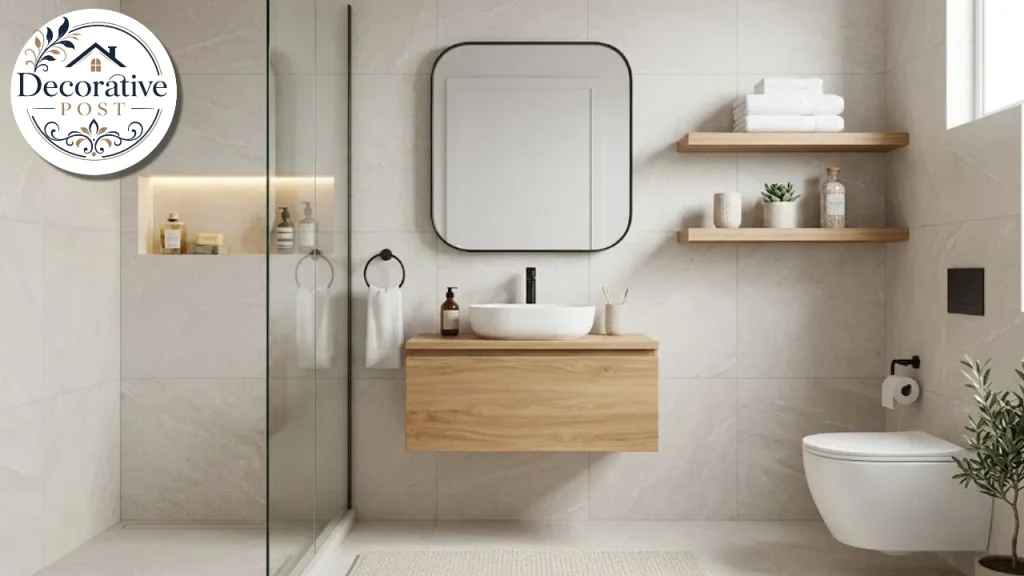
Choose a vanity that suits the room. A narrower unit or a wall-hung one can free space without changing plumbing.
Think vertically. Shelves, a mirrored cabinet and wall niches add storage without adding floor area. The DIY built-ins guide shows how to build storage into awkward spaces.
Use a glass shower door or a curtain in place of a solid screen, so the room feels bigger.
Choose light colours and large tiles. Fewer grout lines make a small room look calmer.
Doing it yourself, partly
A partial DIY approach can save money without risking the project.
The tiered guide suggests designing the project yourself, which can save $250 to $500, and doing the tear-out yourself, which can save $500 to $2,000. Shut off water and electricity first and plan for waste disposal.
Painting and installing accessories are low-risk. Swapping a toilet or faucet is possible for confident DIYers.
Plumbing, electrical, waterproofing and anything needing a permit should go to licensed trades. Mistakes there cause leaks, shock hazards, or failed inspections.
Be honest about time. A professional crew finishes in a couple of weeks, while DIY work on nights and weekends can take months, and you have no other bathroom in the meantime if it is the only one.
If your remodel is the only bathroom in the home, plan a temporary solution before demolition starts.
Is it worth it?
Bathroom remodels hold their value reasonably well. NerdWallet reports that they often recoup at least 60 percent of their cost, and mid-range remodels may recoup up to 80 percent, citing the Journal of Light Construction’s 2025 Cost vs. Value report.
That means a $12,000 project might add roughly $7,000 to $9,600 of value, though results vary by market and by how well the work is done.
Value is not only resale. A bathroom that works, with good ventilation and no leaks, is a daily benefit.
There are drawbacks, as that source notes: higher property taxes after value-adding improvements, disruption to daily life, and the risk of surprise problems.
Keep the work in proportion to the house. A very high-end bathroom in a modest home is unlikely to repay its cost.
A simple budgeting method
Follow these steps and your final bill will be closer to your plan.
First, decide the tier: refresh, mid-range,e or premium. Write it down.
Second, list the items you must replace and those you can keep. Be honest about the condition of the tub, the floor,r and the walls.
Third, price each item using the ranges above, and add labour at 40 to 65 percent of the total.
Fourth, add hidden costs: demolition, permits, waterproofi,ng and disposal.
Fifth, add a 15 to 20 percent cushion. This is not optional.
Sixth, get three written quotes and compare each line against your list.
Seventh, ask each contractor what is not included. The answer often explains the price difference.
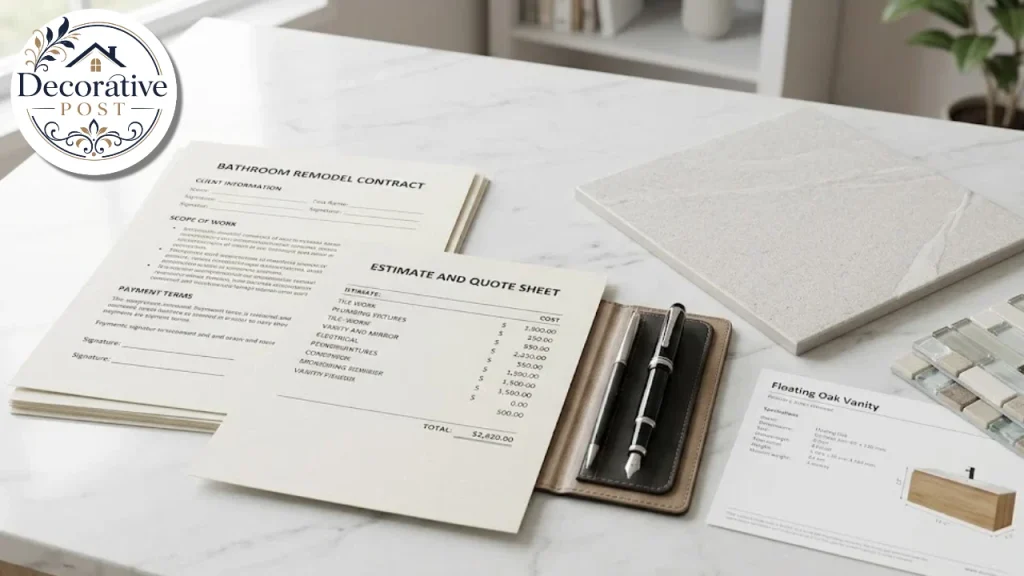
Finally, put the agreed scope, price, schedule and payment terms in a written contract before work begins.
Common mistakes that raise the cost
Starting without a written scope is the most expensive. Changes made mid-project are priced at a premium.
Moving fixtures without a reason adds thousands. If the layout works, keep it.
Choosing tile or fixtures before the budget is set leads to cutting corners elsewhere.
Ignoring ventilation and waterproofing creates rot and mould that cost far more to fix.
Hiring on price alone leads to missing items and change orders.
Skipping the cushion turns a small surprise into a crisis.
Not checking the permit rules can lead to stop-work orders or trouble at resale.
What to take from it
The small bathroom remodeling cost is not one number. It is a range set by your layout, your finishes, and how much you leave to professionals.
Keep the layout, protect the waterproofing and ventilation, and spend on what you touch daily. That is how you control the small bathroom remodeling cost in practice. Those choices do more than any discount.
Budget in tiers, add a cushion, and get three written quotes. A clear scope is the best protection against a runaway bill.
Whatever you choose, remember that the small bathroom remodeling cost is mostly labour and plumbing. Plan those well,l and the rest is decoration.
FAQs:
How much does a small bathroom remodel cost?
Estimates range from about $2,000 to $5,000 for a budget refresh,sh up to $15,000 to $30,000 or more for a premium remodel. A survey-based guide puts40- 40 to 60-square-foot room at about $12,700 to $14,800.
How much does it cost to remodel a 5×8 bathroom?
One guide lists $3,200 to $4,800 for a budget refresh, $7,200 to $11,200 for mid-range, and $11,200 to $15,000 or more for a full gut. Another source gives higher figures, so get local quotes.
What is the cheapest way to remodel a small bathroom?
Keep the existing layout and plumbing, refinish the tub, choose vinyl flooring and a prefab vanity, and do painting yourself. One guide estimates the plumbing layout alone saves $3,000 to $10,000.
How much of the cost is labour?
Guides put labour at 40 to 65 percent of the total. Plumbers, electrician,s and tile setters make up most of it.
Do I need a permit for a bathroom remodel?
Usually when you change plumbing, electrical,windowso,ws or structure. Fees in the guides range from about $100 to $1,000, and your local building department decides.
How much should I set aside for surprises?
Guides recommend 15 to 20 percent. About one in three homeowners in one survey spent more than planned, often because of plumbing or hidden water damage.
Does a bathroom remodel add value?
NerdWallet reports remodels often recoup at least 60 percent of their cost, and mid-range ones may recoup up to 80 percent. Results depend on your market.
What are common hidden costs?
Demolition and disposal, permits, waterproofing, water damage repair, and rework if the layout changes. Water damage was found in about 30 percent of remodels in one guide.
How long does a small bathroom remodel take?
It varies with scope and contractor availability. One guide notes many contractors were booking 8 to 12 weeks out, so schedule early.