

A bedroom should do one thing exceptionally well: help you switch off. That sounds obvious, yet many bedrooms are designed around everything except rest. There is a television pointed at the pillow, a desk covered with work, open shelving packed with belongings, bright ceiling lighting, and enough furniture to make walking around the bed feel like an obstacle course.
Japanese interior design offers another way to approach the room. It favors restraint without demanding discomfort. It appreciates natural materials without requiring a rustic interior. It uses simplicity without making every surface sterile.
That balance is what makes a Japanese bedroom so appealing. You can borrow the visual language of traditional Japanese interiors or create a contemporary interpretation with an ordinary mattress, hardwood floor, and modern wardrobe.
The important part is understanding the principles behind the look instead of copying a collection of recognizable objects. This guide focuses on how to make those principles work in an actual bedroom, including small rooms, apartments, rentals, traditional-inspired spaces, and modern homes.
Start With Less Furniture, Not Less Comfort
The first step isn’t buying anything. Walk around your bedroom and identify the furniture you rarely use. Perhaps there is a chest that mostly collects mail. Maybe a chair exists primarily as a clothes pile. Perhaps two nightstands are unnecessary because one side of the bed already has a wall.
Japanese-inspired interiors tend to work well because furniture is allowed to have breathing room. That doesn’t mean you should own as little as possible. It means each item should earn its place. A useful bedroom might only require:
- a bed
- bedside surface
- wardrobe
- lighting
- laundry solution
- one comfortable textile
- a few personal objects
Everything else depends on the room and the person using it.
Why Empty Space Matters
In many Japanese interiors, open space isn’t treated as a decorating failure. It creates separation between objects. A beautiful wooden cabinet becomes more noticeable when it isn’t surrounded by five smaller pieces of furniture. A window feels larger when nothing blocks it.
The bed feels calmer when there is visible floor around it. This is particularly useful in small bedrooms. Instead of trying to make a small room appear larger through mirrors and tricks, sometimes the better solution is simply to remove the furniture that interrupts the eye.
Decide How Traditional You Want to Go
There is a major difference between a traditional Japanese room and a contemporary bedroom influenced by Japanese design. A traditional washitsu may feature tatami, fusuma, shoji, a tokonoma, and specialized storage. These features are part of an architectural system rather than individual decorative items.
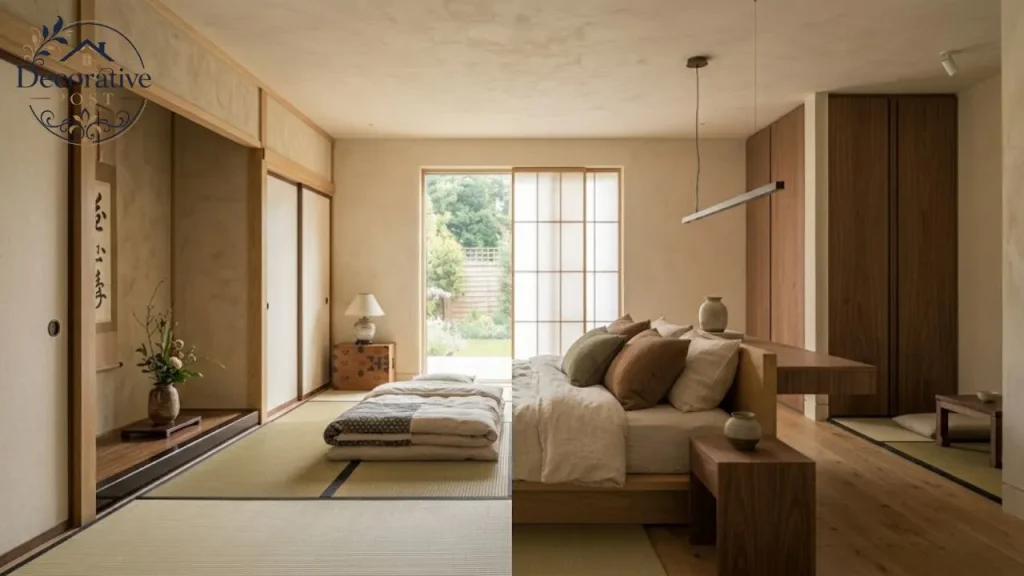
A modern bedroom might borrow only the low furniture, natural materials, restrained colors, and careful use of space. Both approaches are valid. Before decorating, decide which direction you prefer.
Light Japanese influence
Best for ordinary bedrooms. Use natural wood, low furniture, quiet colors, and soft lighting.
Strong contemporary Japanese influence
Add screens, Japanese-inspired furniture, traditional textiles, and more deliberate spatial planning.
Traditional direction
Consider tatami, futon-based sleeping arrangements, and traditional architectural features where appropriate. Making this decision early prevents the room from becoming confused.
Build the Room Around the Bed
The bed is the largest object in the bedroom, so it should establish the room’s visual language. Low-profile beds are particularly effective. They create a strong horizontal line and reduce the amount of visual space occupied by the sleeping area. A wooden platform can work beautifully. Choose one with:
- a simple silhouette
- limited ornament
- visible or understated wood grain
- sturdy construction
- a practical mattress height
Don’t choose a bed simply because the product description says “Japanese.” Look at the proportions. Does it feel light? Does it leave enough floor around it? Does the headboard dominate the wall? Can you comfortably get in and out? Those questions matter more than the label.
What If You Prefer a Normal Mattress?
Keep it. Japanese influence doesn’t require changing your sleeping habits. A conventional mattress on a low wooden frame can achieve much of the same visual effect.
You can also reduce the apparent height of an existing bed with simple bedding and a restrained headboard. Design should support your life rather than forcing you into an uncomfortable routine.
Understanding Futons Before Buying One
A Japanese futon is not simply a thin Western mattress. Traditional bedding systems can include a shikibuton used as the sleeping surface and a kakefuton used as a quilt or covering. Such bedding may be placed on tatami and stored when not being used.
This arrangement makes sense when flexibility is important. A room can become open floor space during the day. But it requires maintenance. The bedding needs appropriate airing and storage, and moisture management matters.
If you live somewhere humid, placing bedding directly on a floor without adequate ventilation can create problems. For someone who loves the ritual, a futon can be wonderful. For someone who wants to make the bed once and forget about it, a platform bed is probably the smarter choice.
Use the Floor as a Design Element
Traditional Japanese rooms demonstrate a different relationship with the floor. Tatami is not simply a decorative surface. It influences how the room is occupied and is closely associated with washitsu interiors. If you want a traditional room, authentic tatami deserves proper consideration.
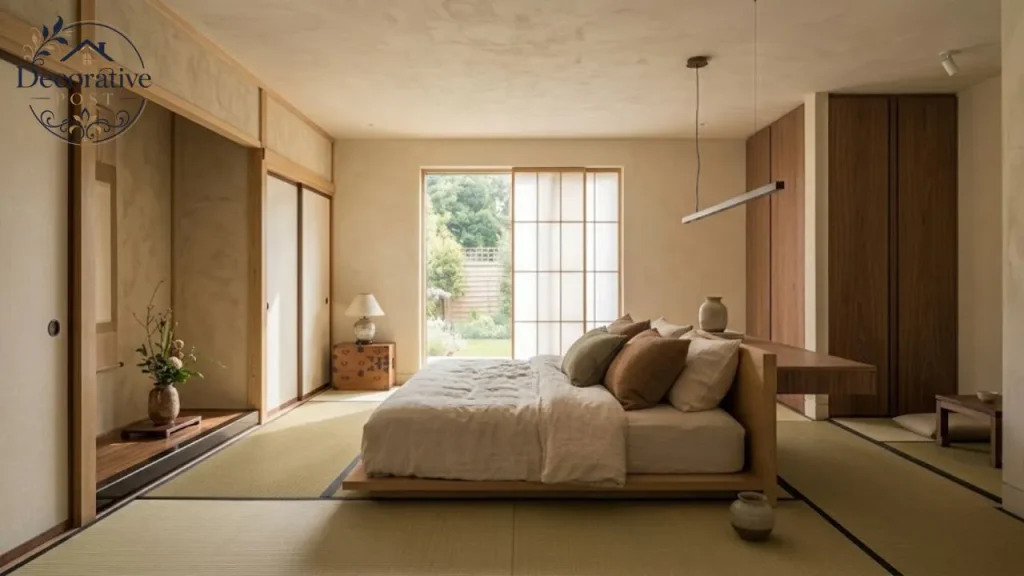
For most modern bedrooms, though, you can achieve a related feeling through flooring that feels natural and visually quiet. Hardwood is an easy choice. Choose:
- matte oak
- ash
- walnut
- natural bamboo-inspired finishes
- muted timber tones
Avoid very glossy finishes if you want a relaxed atmosphere. A natural-fiber rug can soften the area around the bed without overwhelming the floor.
Let Materials Carry the Decoration
One of the strongest ways to avoid a generic minimalist bedroom is to introduce tactile variation. Imagine a room containing: a smooth wooden bed, slightly irregular ceramic, washed linen, a woven basket, and a textured wall.
There may be very few objects, but the room still feels rich. This is because the eye is responding to material differences. You don’t need patterned wallpaper and decorative shelves to create interest. Try combining:
wood + linen + ceramic
or
wood + cotton + woven fiber
or
plaster + timber + stone
Keep the palette related. The room should feel collected rather than assembled from a single furniture catalogue.
Choose Colors That Feel Grounded
A Japanese-inspired bedroom can be light or dark. The safest starting point is to use colors that appear naturally together. Think about:
- warm ivory
- sand
- mushroom
- taupe
- soft gray
- moss
- muted olive
- clay
- charcoal
- dark brown
You can use stronger colors, but keep them controlled. A dark olive wall with pale bedding and warm wood can feel sophisticated. A charcoal wall behind a light oak bed can create depth. A clay-colored accent can add warmth without turning the room bright. The objective isn’t to make everything neutral. It’s to make the colors cooperate.
Don’t Make Every Surface Beige
This is a surprisingly common mistake. Neutral design can become flat when every object belongs to the same color family. Contrast gives the room structure. Try a pale wall against darker furniture. Or light bedding against a walnut bed. Or warm white walls with muted green curtains.
Even a small amount of black can sharpen an otherwise soft palette. Japanese-inspired rooms often benefit from this quiet contrast.
Use Natural Light as Part of the Design
Daylight should shape the room. Notice where the sun enters in the morning and afternoon. If the bed receives strong direct light, choose window treatments that allow you to soften it. If the room is naturally dark, don’t fill it with dark furniture simply because you want a moody interior.
Use reflective light-colored walls and carefully placed lamps instead. Traditional Japanese architecture has long used screens, overhangs, and transitional spaces to manage light and shade. The modern interpretation is simple: Don’t treat daylight as something that merely happens. Design around it.
Layer the Artificial Lighting
One ceiling fixture cannot do every job. At bedtime, you may want only a small pool of light beside the bed. When dressing, you’ll need stronger illumination. When reading, you’ll need focused light. When cleaning, you’ll want the entire room visible. Use separate sources for separate needs. A practical combination is:
Ceiling light: general illumination.
Bedside lamp: reading and evening use.
Floor or wall lamp: ambient light.
Closet lighting: practical visibility.
A fabric or paper shade can soften the bulb and prevent harsh glare.
The Right Bedroom Lighting Is Almost Invisible
Good lighting shouldn’t become the star of the room. You should notice the atmosphere, not constantly notice the fixture. This is why concealed or diffused light can work so well.
Light a wall rather than shining directly across the room. Put a small lamp behind a screen. Use a shade that creates a gentle glow. At night, the room should feel softer than it does during the day.
Think Carefully About Windows
Windows provide both light and visual movement. Don’t automatically cover them with heavy curtains. If privacy permits, use a translucent layer that keeps daylight while reducing glare. Add blackout curtains for sleeping if needed.
This layered approach gives you control. It also echoes the broader Japanese design idea of filtering rather than always blocking. In an apartment, a translucent divider can also separate the bedroom from the rest of the living area without making the space feel boxed in.
Shoji Should Be Understood, Not Just Copied
Shoji screens are strongly associated with Japanese interiors because of their translucent surfaces and timber framework. Their function matters. They can separate spaces while allowing light to move through them. A modern bedroom can borrow that idea through:
- translucent curtains
- fluted glass
- timber screens
- sliding panels
- frosted glass
- lightweight fabric partitions
You don’t need decorative fake shoji panels on every wall. One functional screen is far more effective than several purely decorative ones.
Keep the Ceiling Quiet
Bedrooms are often decorated from the floor upward and then abandoned at the ceiling. That can create an imbalance. If your room already has architectural interest overhead, let it show. If the ceiling is plain, keep it quiet. A warm white ceiling can support earthy wall colors.
Wooden details can work in suitable architecture. Avoid adding artificial beams solely to create an “Asian” appearance. Japanese design is not a costume.
Use Storage to Protect the Atmosphere
Clutter doesn’t disappear simply because you call your bedroom minimalist. It needs somewhere to go. This is where storage becomes a design decision. A good storage system should handle:
- everyday clothing
- folded bedding
- shoes
- accessories
- electronics
- books
- laundry
- seasonal items
Closed wardrobes are useful because they remove visual noise. Drawers can hide smaller objects. Under-bed storage can handle things you don’t need every day. Wall-mounted shelves should be used selectively. Open shelving looks attractive in photographs but requires constant editing. If you aren’t prepared to maintain it, use doors.
Take Inspiration From the Oshiire
Traditional Japanese rooms may include an oshiire, a built-in storage area associated with bedding and household items. The modern lesson isn’t that every bedroom needs an oshiire. It’s that storage should be integrated into the room’s architecture whenever possible.
A full-height wardrobe can perform the same visual job. The less storage looks like an afterthought, the calmer the bedroom will feel.
Give Your Nightstand a Limit
The bedside table is where minimalism usually goes to die. One charger becomes three. Then a water bottle. Then two books. Then hand cream. Then headphones.
Then yesterday’s receipt. Set a physical limit. Choose a small surface. Keep only the items you use every night. Use a drawer or hidden shelf for everything else. The room will look more intentional immediately.
Use One Strong Natural Element
You don’t need an indoor garden. One plant can be enough. A branch in a ceramic vessel can work too. A wooden object with beautiful grain can provide the same natural note. Seasonal flowers can introduce temporary color. The point is not to decorate with “nature-themed” objects. It is to allow real natural materials and living elements to participate in the room.
Choose Handmade Pieces Carefully
A handmade object can give a minimalist bedroom something mass-produced furniture often lacks: irregularity. A ceramic bowl doesn’t have to match the vase.
A handwoven textile doesn’t have to be perfectly uniform. A wood stool can show knots and variations. These details prevent simplicity from becoming sterile. They also make the room feel more personal.
Use Art to Establish Personality
A bedroom without decoration can feel peaceful. It can also feel anonymous. Artwork solves that problem when chosen carefully. Instead of filling the walls, choose one piece that genuinely means something to you. A landscape.
An abstract. A monochrome photograph. A botanical study. A textile. The style matters less than the relationship between the artwork and the rest of the room.
Where Wabi-Sabi Can Help
Wabi-sabi is often used too casually in modern decorating language. Rather than treating it as a simple synonym for “old and imperfect,” understand it as part of a much broader Japanese aesthetic and philosophical tradition. For decorating purposes, one useful takeaway is the appreciation of natural variation.
Wood doesn’t need to look flawless. Linen can wrinkle. Ceramics can show handmade irregularities. Older objects can retain their value. The Metropolitan Museum of Art has explored Japanese artistic traditions and the relationship between Zen and concepts associated with wabi-sabi.
This attitude is particularly useful in a bedroom because it makes the space feel less precious. You can actually live in it.
Make the Bedroom Comfortable First
A beautifully designed room is still a bad bedroom if it doesn’t support sleep. Don’t compromise your mattress for appearance. Don’t choose curtains that let streetlights shine directly onto the pillow. Don’t buy a beautiful lamp that creates glare.
Don’t choose an uncomfortable chair because it photographs well. Don’t install a low bed that makes getting up difficult for you. The aesthetic should be built around your needs. This is where thoughtful Japanese-inspired design differs from a themed room. It adapts.
Design for Your Climate
Natural materials behave differently depending on the environment. This is especially relevant if you’re considering floor bedding or tatami. Humidity can affect fabrics, wood, and natural floor materials. Ventilation matters.
Air circulation matters. Drying bedding matters. A Japanese-inspired room should be adapted to its location rather than copied blindly from a photograph taken somewhere else. If you live in a humid climate, leave enough space for airflow and avoid trapping damp bedding against the floor.
If you live in a dry climate, natural timber and textiles may require different care. Good design respects the environment in which it exists.
Small Japanese Bedroom Ideas
Small bedrooms benefit from the discipline of this style. Instead of trying to make the room look “full,” protect its most important areas. Keep a clear route from the door to the bed. Choose furniture that doesn’t project unnecessarily into the walking space.
Use vertical storage. Mount lighting on the wall. Use a narrow bedside shelf. Choose a bed frame with integrated storage if needed. And leave some floor visible. Visible floor is not space you failed to decorate. It’s one of the things making the room feel larger.
Japanese Bedroom Ideas for a Narrow Room
A narrow bedroom needs careful furniture placement. Avoid creating two parallel walls of bulky furniture. Place the largest piece along the strongest axis of the room. Keep one side visually lighter. A low bed helps because it doesn’t block the room with a tall headboard.
Use a single large textile rather than several small rugs. A horizontal artwork can visually widen the composition. The fewer interruptions there are, the more spacious the room can feel.
Japanese Bedroom Ideas for a Rental
You can achieve the look without touching the structure. Focus on removable elements:
- bedding
- curtains
- lamps
- rugs
- furniture
- artwork
- storage boxes
- plants
A freestanding wooden screen can create a separate dressing area. A low bed can change the proportions of the entire room. Warm lighting can transform the atmosphere without any renovation. Even a rented bedroom can feel deliberately designed.
Japanese Bedroom Ideas on a Budget
If money is limited, don’t divide the budget evenly. Spend where you’ll notice the difference every day.
Improve the lighting
A small lamp can make a bigger atmospheric difference than a decorative object.
Simplify the bedding
Replace busy patterns with quality-looking solids.
Rearrange the furniture
This costs nothing.
Remove visible clutter
Also free.
Add one natural material
A wooden stool, woven basket, or ceramic vessel is enough.
Upgrade the curtains
Large areas of fabric strongly influence the room.
Save decorative purchases for last
Once the room is calm, you may discover that you don’t need much decoration.
How to Make a Japanese Bedroom Cozy
Minimal doesn’t have to mean cold. Use layers of texture. Try:
- washed linen
- cotton blankets
- wool throws
- woven rugs
- timber
- ceramic
- textured plaster
- soft curtains
Warmth comes from the combination. A completely smooth room can feel sterile even when the colors are perfect. Texture gives the eye and hand something to experience.
How to Make a Japanese Bedroom Feel Expensive
Don’t start with expensive accessories. Focus on consistency. Use the same general wood tone throughout the room. Keep the color palette disciplined. Choose lighting carefully. Avoid furniture that is too large. Keep surfaces clean.
Invest in one beautiful material rather than many mediocre ones. Luxury often comes from restraint. When there is less in the room, flaws become easier to see. That means proportions and craftsmanship matter more.
Japanese Style Without the Stereotypes
You can create a distinctly Japanese-inspired room without using:
- artificial cherry blossoms
- Japanese lettering on every wall
- decorative fans
- excessive bamboo
- novelty lanterns
- themed bedding
- imitation temple ornaments
These objects aren’t automatically wrong. The problem comes when they become the entire design language. Use the architecture and materials first. Let decorative references remain subtle. The room should look like a home influenced by Japanese design, not a themed set.
Japanese Bedroom or Japandi?
These styles are related but shouldn’t be treated as identical. A Japanese bedroom may draw more directly from Japanese spatial traditions, low furniture, tatami, natural materials, and traditional architectural references.
Japandi combines Japanese restraint with Scandinavian functionality, light timber, soft textiles, and contemporary Nordic forms.
If your room contains pale oak furniture, cozy wool, simple Scandinavian chairs, and Japanese-inspired restraint, it may lean Japandi. If it uses tatami, shoji, low furniture, and stronger Japanese architectural references, it leans more directly Japanese. You can also combine the two. Just make the combination intentional.
A Practical Furniture Checklist
Before buying anything, measure the room. Then check:
Bed: Is there enough space around it? Nightstand: Can it hold what you actually need? Wardrobe: Can it contain your clothes without overflow? Lighting: Can you turn off the main light from bed? Storage: Where will extra bedding go?
Circulation: Can two people comfortably move around the room? Windows: Does furniture block daylight? Doors: Can wardrobes and drawers open fully? These questions are much more valuable than choosing furniture based on a photograph.
Five Visual Rules That Make the Style Work
If you want a quick framework, remember these five rules.
Keep the furniture low
This reduces visual heaviness.
Keep the palette limited
Fewer colors create cohesion.
Keep the materials tactile
Natural surfaces prevent minimalism from feeling sterile.
Keep storage contained
Closed doors protect the calm atmosphere.
Keep some space empty
The room needs somewhere for the eye to rest.
A Weekend Transformation Plan
If your bedroom currently feels chaotic, you don’t need a complete renovation.
Edit
Remove anything that doesn’t belong. Clear surfaces. Sort clothing. Remove unnecessary furniture. Measure the room.
Rebuild
Reposition the bed. Improve circulation. Set up storage. Adjust the curtains. Add layered lighting. Then bring back only the objects that genuinely improve the room. This approach is much more effective than buying decorative accessories first.
The Final Test Is How the Room Feels
Stand at the entrance after sunset. Don’t inspect the details. Look at the room as a whole. Is there a calm visual path toward the bed? Are the lights comfortable? Can you see piles of belongings? Does the furniture feel oversized? Is there enough open floor? Does anything immediately demand attention? Then lie down.
The bedroom should feel comfortable from the position that matters most. If the room looks beautiful from the doorway but feels harsh, cluttered, or uncomfortable from the bed, the design isn’t finished.
Final Thoughts
The appeal of Japanese bedroom design isn’t that it gives you another decorating theme to follow. It offers a different way of making decisions. Choose fewer things, but choose them carefully. Let natural materials contribute texture.
Give storage a proper role. Use lighting to shape the mood. Respect the architecture you already have. Adapt traditional ideas rather than copying them blindly. And don’t be afraid of an empty corner. A peaceful bedroom doesn’t need to be spectacular.
It needs to make sense. When the bed is comfortable, the lighting is gentle, the belongings are under control, and the materials feel good around you, the room begins to do what a bedroom is supposed to do. It gives you somewhere to disappear from the noise of the day.
Frequently Asked Questions
What makes a bedroom look Japanese?
A Japanese-inspired bedroom usually combines low-profile furniture, natural materials, muted earthy colors, uncluttered surfaces, soft lighting, practical storage, and plenty of visual breathing room.
What should I put next to a bed in a Japanese-style bedroom?
Keep it simple. A small wooden nightstand, floating shelf, low stool, or compact cabinet is usually enough for a lamp, book, water, or other bedtime essentials.
What wood looks best in a Japanese bedroom?
Oak, ash, walnut, and other natural timber finishes can work well. Choose a finish that shows the character of the wood without excessive gloss or heavy ornamentation.
Can I create Japanese bedroom style with white walls?
Absolutely. Warm white walls create an excellent foundation for wood furniture, linen bedding, darker accents, ceramics, and natural textures.
Should Japanese bedroom furniture be low?
Low furniture is a common feature because it creates a lighter visual profile and emphasizes open floor space. However, comfort and accessibility should come before strict adherence to a particular height.
How do I decorate a Japanese bedroom without making it look boring?
Create interest through texture and contrast instead of adding lots of objects. Combine wood, linen, ceramics, woven materials, soft lighting, and one or two meaningful decorative pieces
What plants work in a Japanese-inspired bedroom?
Choose plants that suit the room’s actual light and humidity. A single carefully placed plant, branch arrangement, or seasonal floral display is often enough to introduce a natural element.
Can dark colors work in a Japanese bedroom?
Yes. Charcoal, deep brown, muted green, and other darker shades can create a calm, intimate atmosphere when balanced with lighter bedding, natural wood, and warm lighting.