

A kitchen can be sleek without feeling sterile, minimalist without feeling empty, and contemporary without looking like a showroom. That balance often starts with the cabinetry. Cabinets cover a large percentage of the kitchen, so their proportions, finish, hardware, and layout have an outsized effect on the entire room.
Change the cabinets, and you can change the character of the kitchen without changing the footprint. But choosing cabinetry based on a photograph alone is risky. A door that looks stunning online may be impractical for your household.
A fashionable color may fight your natural light. A beautiful cabinet can still disappoint if the drawers, hinges, storage, or installation are poor. The smartest approach is to separate the decision into three parts:
How should the kitchen look? How should it function? What level of construction makes sense for the budget? Once those questions are answered, choosing the details becomes much easier.
What Defines a Modern Kitchen?
Modern design is less about a particular color and more about how the elements relate to one another. You will often see cabinetry with simple geometry, uninterrupted surfaces, minimal ornamentation, and carefully controlled spacing.
That can mean a completely flat cabinet front, but it doesn’t have to. A contemporary kitchen might combine:
- plain painted doors
- natural timber
- subtle panel detailing
- integrated appliances
- large drawers
- concealed hinges
- streamlined handles
- tall pantry units
- simple countertops
- architectural lighting
The common thread is restraint. There is usually a reason for each visible element. That is why modern kitchen cabinets can contain warm wood, handmade tile, vintage stools, or an unusual light fixture and still feel contemporary. Modern does not have to mean “everything matches.”
The Difference Between Modern and Contemporary Cabinets
These terms are often used loosely, particularly on retail websites. A modern kitchen cabinet typically emphasizes clean geometry and uncomplicated forms. Contemporary design is broader. It refers to what feels current at a particular point in time, which means it can change.
A kitchen can therefore have modern cabinet construction while incorporating contemporary trends such as natural wood, earthy colors, textured surfaces, or integrated appliances. This is useful when planning a long-term remodel.
If you focus entirely on what is currently fashionable, the room can become a time capsule. If you concentrate on proportion, quality, and functionality, you have more freedom to update the surrounding elements later.
Start With the Cabinet Layout, Not the Color
Many homeowners begin with questions such as: “Should I choose green?” “Would white look better?” “Should I use oak?” Those questions matter, but they come later. First, determine where the cabinetry needs to go. Consider the main work areas:
- refrigerator
- sink
- preparation area
- cooktop or range
- oven
- pantry
- dish storage
- cookware storage
- waste and recycling
- small appliances
The layout should reduce unnecessary movement. If the coffee maker lives across the kitchen from the cups and refrigerator, no beautiful cabinet finish will make the morning routine more efficient.
This is where professional kitchen planning earns its value. Good cabinetry isn’t simply fitted into an empty room. It is organized around movement.
Flat-Panel Doors: The Classic Modern Choice
If you want an immediately recognizable modern appearance, flat-panel cabinetry is one of the simplest routes. The front has little visual decoration, allowing the material and proportions to become the focus. A flat door can be:
- painted
- veneered
- laminated
- wood
- matte
- glossy
- textured
That versatility is one reason the style has remained popular.
Why slab doors work so well
Large uninterrupted surfaces make a room feel visually orderly. They can also work particularly well in open-plan homes where the kitchen needs to coexist with furniture and living spaces rather than dominate them. But there is a trade-off.
The simpler the cabinet front, the more visible installation errors become. Crooked drawers, uneven gaps, inconsistent reveals, or doors that sit at different depths can ruin an otherwise excellent design. With minimalist cabinetry, precision is part of the aesthetic.
A Modern Shaker Kitchen Can Work Too
If completely flat doors feel too stark, consider a contemporary Shaker profile. The key is proportion. A narrow frame, simple finish, full overlay, understated hardware, and modern lighting can make Shaker cabinetry look surprisingly current.
This approach also gives you some flexibility if your taste sits between traditional and contemporary. It can work particularly well in older homes where ultra-modern European cabinetry might feel disconnected from the architecture. Instead of fighting the character of the house, a restrained Shaker door can bridge old and new.
Cabinet Construction: The Detail You Don’t See in Photos
Beautiful photographs encourage buyers to focus on the door. That is understandable. But cabinetry has a hidden side that may matter more over years of use. Look at the cabinet box. Ask what the manufacturer uses for:
- side panels
- backs
- shelves
- drawer boxes
- drawer bottoms
- support rails
- hinges
- runners
Also ask how the components are joined. Plywood, MDF, particleboard, and solid wood all have different properties and applications. A cabinet should not be judged by one material name alone.
For example, MDF can be an excellent substrate for certain painted doors because of its smooth surface. Engineered panels can also provide consistency in manufactured cabinetry. What matters is whether the entire system is appropriately engineered for the job.
Plywood Doesn’t Automatically Mean “Best”
Plywood is often positioned as a premium feature, and it can be an excellent choice for cabinet boxes. But don’t stop at the label. Find out where plywood is used. Does it make up the entire cabinet box? Are shelves plywood? What are the drawer boxes made from?
What is the back panel? What type of hardware is included? Two cabinets can both advertise plywood construction while differing substantially in other components. A useful comparison looks at the entire specification rather than one attractive material claim.
Choosing Between Framed and Frameless
Framed cabinets have a face frame attached to the front of the cabinet box. Frameless cabinets do not have that traditional frame. Frameless construction can provide a clean, continuous appearance and is frequently associated with European-style cabinetry.
Framed cabinetry offers a range of construction and design possibilities and can work beautifully in a modern kitchen. Neither choice automatically guarantees quality. If you’re comparing quotations, ask the supplier to explain the construction rather than assuming one category is inherently superior.
What Does Full Overlay Mean?
Full overlay describes the position of the cabinet door relative to the cabinet opening. With a full-overlay design, the door covers nearly the entire visible cabinet face, leaving relatively small gaps between neighboring doors and drawers.
This produces the continuous appearance many people associate with contemporary cabinetry. It is worth remembering: Frameless = cabinet construction. Full overlay = door positioning. They can be combined, but they are not synonyms. Understanding this terminology makes shopping much less confusing.
Natural Wood Is Giving Modern Kitchens More Personality
Wood cabinetry can be an excellent antidote to overly clinical minimalism. Instead of relying on decorative profiles, the cabinet uses grain, tone, and texture to create visual interest. White oak is particularly versatile because its relatively light appearance works with both pale and dark surroundings.
Walnut produces a richer, more dramatic effect. Wood veneer can also provide a consistent appearance while using a thin layer of real timber over a stable substrate. The best result often comes from allowing wood to be the star rather than covering the kitchen in several competing wood tones.
Are White Cabinets Still Modern?
Absolutely. White cabinetry remains useful because it works with an enormous range of countertops, floors, backsplashes, and hardware. The more interesting question is which white. A cool white can feel crisp and architectural.
A warmer white can feel softer and more residential. The difference becomes especially noticeable when the cabinets sit beside natural stone or warm wood. Always look at samples in your own space. A cabinet sample under a showroom’s bright neutral lighting tells you only part of the story.
What About Green, Blue, Gray and Black?
Color can transform a kitchen, but strong colors deserve more planning than neutral ones.
Muted green
Soft olive, sage, moss, and gray-green tones can work beautifully with timber and natural stone.
Blue
Deep navy and dusty blue can provide contrast without the intensity of brighter colors.
Gray
Gray can be sophisticated, but cooler grays may feel flat when paired with the wrong flooring or lighting.
Black
Black cabinetry creates strong architectural contrast. It works particularly well with light countertops, natural wood, metallic accents, and generous lighting. In a small or poorly lit room, however, a large expanse of black cabinetry can feel heavy. There is no universal “best” cabinet color. The room decides.
The 2026 Direction: Warmer, More Natural Kitchens
Current design data points toward a greater appreciation for natural materials and warmth. Houzz’s 2026 U.S. Kitchen Trends Study reported wood cabinetry at 29% among renovating homeowners, narrowly ahead of white at 28%.
That doesn’t mean white kitchens have disappeared. It suggests something more useful: homeowners are increasingly comfortable with cabinetry that introduces visible material character. NKBA’s 2026 kitchen trends research similarly highlights natural materials and the continued importance of wood, including white oak.
The practical lesson is not to blindly follow a trend. If you love white cabinets, use them. If you prefer oak, use oak. A well-proportioned kitchen with a finish you genuinely like will generally outlast a design chosen because a trend report said it was fashionable.
How to Keep a Modern Kitchen From Feeling Cold
This is one of the biggest design challenges with minimalist cabinetry. When every surface is smooth, pale, and reflective, the room can lose texture. The solution isn’t necessarily more decoration. Instead, introduce warmth through materials.
Try combinations such as: soft white cabinets + oak flooring + warm stone; natural oak cabinets + creamy backsplash + aged brass; muted green cabinets + walnut accents + warm lighting; charcoal cabinets + pale countertop + timber seating
Notice that each combination uses contrast without becoming chaotic. That is the trick.
Hardware Can Make the Same Cabinets Look Completely Different
Imagine the same slab cabinet with three hardware choices. A long brushed-metal pull emphasizes the horizontal lines. A small knob creates a softer impression. A recessed or integrated pull keeps the front almost completely uninterrupted.
None is automatically more modern. The hardware needs to relate to the scale of the cabinet. A tiny handle can disappear on a tall pantry door. An oversized pull can overpower a small drawer. And because kitchen hardware gets touched constantly, comfort matters. Hold samples in your hand before making the final decision.
Handleless Cabinets: Beautiful but Not Always Practical
Handleless cabinetry can create one of the cleanest possible kitchen fronts. There are several ways to achieve it, including recessed profiles and push-to-open mechanisms. But don’t choose the system solely because the photograph looks beautiful.
Ask yourself how the doors will be used. What happens when your hands are wet? What happens when you’re holding a heavy pan? Can the mechanism be adjusted? What happens if a component fails? A kitchen is a working room. Convenience should have a vote.
Use Large Drawers Where They Make Sense
A modern kitchen often benefits from fewer, wider drawers. Instead of dividing cookware among several narrow cabinets, a deep drawer can store pots, pans, lids, and cooking utensils together. This also improves visibility. You can look down into the drawer instead of moving objects out of the way to reach something behind them.
That said, don’t make every cabinet a drawer. Some items are better stored behind doors. The goal is not to follow a formula. It is to match the storage type to the objects inside.
Build Storage Around the Way You Live
Before finalizing the cabinet plan, mentally walk through a normal day. Where do groceries arrive? Where do you unload them? Where do you make coffee? Where do dirty dishes accumulate? Where do children reach for snacks?
Where do you keep cleaning supplies? Where do you store large appliances? Where does recycling go? Where do serving dishes live when guests arrive?
These questions sound ordinary because they are. That’s exactly why they’re valuable. A kitchen is used through hundreds of small routines that never appear in an inspiration photograph.
Pantry Cabinets Can Be More Useful Than Decorative Storage
Tall pantry cabinets make excellent use of vertical space. They can hold:
- dry goods
- cereal
- canned food
- baking ingredients
- small appliances
- food storage containers
Pull-out pantry systems can improve visibility, although their usefulness depends on cabinet width and hardware quality. Don’t automatically choose the most complicated mechanism. Sometimes a well-organized set of adjustable shelves is more reliable and easier to use.
Floor-to-Ceiling Cabinets: A Design and Storage Decision
Tall cabinetry can make a kitchen feel more integrated with the architecture. It also reduces the awkward strip of wall above standard cabinets where dust tends to collect. But floor-to-ceiling storage has consequences. It can make a room feel visually heavier.
It can also be difficult to access the highest shelves. If you are considering it, decide what those upper areas will actually store. A cabinet that looks impressive but contains things you never use is not necessarily good planning.
Integrated Appliances Create a Quieter Kitchen
Panel-ready appliances can allow refrigerators and dishwashers to visually disappear into the cabinet wall. This is particularly attractive when the kitchen is open to a dining or living space. But integration needs to be planned early.
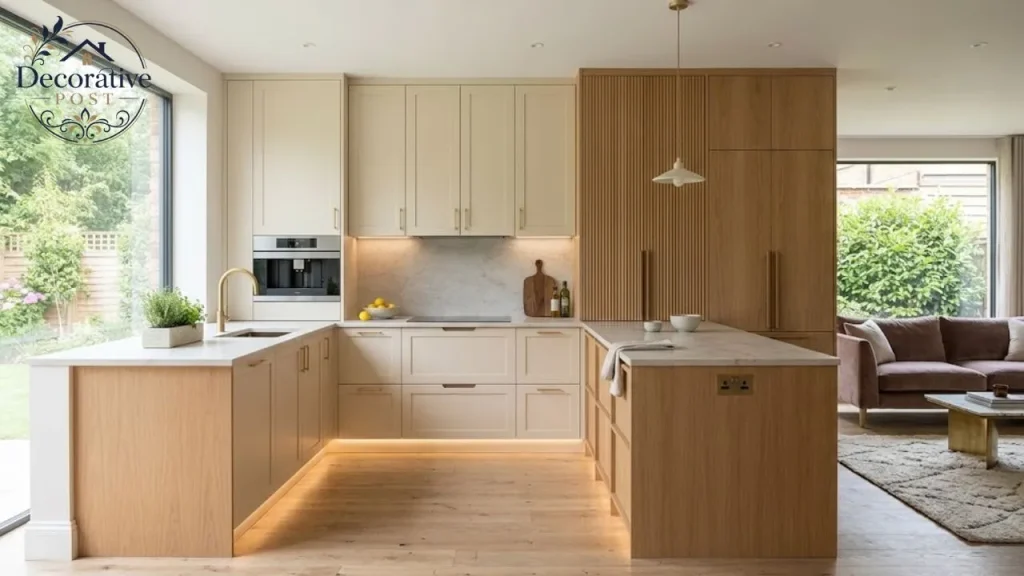
Appliance dimensions, ventilation, door swings, clearances, and service access should be coordinated before cabinetry is finalized. Never assume an appliance can simply be “hidden later.”
Modern Cabinets for Open-Plan Homes
Open-plan kitchens need to work visually from multiple directions. You may see the cabinet wall while sitting on the sofa. That means the backs and sides of islands, tall units, and exposed cabinet ends deserve attention.
A kitchen that looks excellent from the cooking area can feel unfinished from the living room if exposed panels, appliances, or clutter haven’t been considered. In these homes, simple cabinetry can be especially effective because it behaves more like architectural furniture.
Small Kitchens Need Visual Discipline
A small kitchen doesn’t necessarily need tiny cabinets. In fact, a collection of narrow doors can make the room feel busier. Consider fewer, broader cabinet fronts. Use vertical storage where appropriate. Keep the palette controlled.
Choose lighting carefully. If possible, conceal appliances that would otherwise create visual interruptions. Open shelving can help in some kitchens, but it should not become an excuse to display everything you own. Sometimes the cleanest small kitchen is the one with the most things hidden.
How Lighting Changes Cabinet Appearance
Never choose cabinet color without thinking about lighting. A cabinet finish can appear completely different in:
- morning daylight
- afternoon sunlight
- warm evening light
- cool LED light
Modern kitchens benefit from layered illumination. Use general lighting for the room, task lighting for preparation areas, and accent lighting where it improves atmosphere or highlights architectural features.
Under-cabinet lighting is particularly valuable because it illuminates the countertop without forcing you to work in your own shadow.
What Cabinet Features Are Worth the Extra Money?
Not every upgrade has equal value. If you have to prioritize, consider spending more on things you interact with repeatedly. That might include:
- durable drawer runners
- adjustable hinges
- soft-close hardware
- full-extension drawers
- sturdy drawer boxes
- quality cabinet boxes
- useful pantry systems
- accurate installation
- durable finishes
A specialized accessory is worth the money when it solves a real problem. It is not worth the money simply because a showroom has it.
How to Evaluate Cabinet Quality
If you’re buying from a U.S. manufacturer, independent certification can provide useful evidence beyond marketing language. The Kitchen Cabinet Manufacturers Association’s A161.1 certification evaluates cabinetry through tests covering structural performance, doors, drawers, and finishes.
The program includes testing such as repeated door and drawer cycling and load testing. For composite wood products sold in the United States, EPA’s TSCA Title VI requirements address formaldehyde emissions from products such as hardwood plywood, MDF, and particleboard.
Certification does not tell you everything. Still, independently verifiable standards are more meaningful than vague claims such as “premium quality.” Also inspect the actual sample.
Open the doors. Pull the drawers. Look at the edges. Check the finish. Ask how replacement parts are handled. That hands-on inspection can reveal more than a beautiful brochure.
Don’t Compare Cabinets by Price Alone
Suppose one quote is significantly lower than another. Before assuming you’ve found a bargain, compare what is included. Check:
- cabinet count
- dimensions
- door material
- box material
- shelves
- drawer boxes
- hinges
- drawer slides
- finish
- fillers
- panels
- decorative ends
- hardware
- delivery
- installation
- warranty
A low headline price can become less attractive when basic features are treated as upgrades. The goal is to compare equivalent specifications.
The Most Common Design Mistakes
Choosing a color before considering the room
The same color behaves differently depending on natural light, flooring, and surrounding materials.
Buying for appearance alone
A beautiful kitchen can still have terrible storage.
Ignoring exposed cabinet ends
These surfaces are visible from places you may not expect.
Forgetting appliance clearances
A cabinet layout can look perfect on paper and fail when an appliance door cannot open properly.
Overloading the room with trends
A modern kitchen does not need every current design feature.
Choosing hardware without testing it
What looks elegant can feel awkward in daily use.
Treating installation as secondary
Minimalist cabinetry demands careful installation because alignment and spacing are so visible.
Where Should You Save Money?
If the budget is tight, simplify things that are relatively easy to change. Hardware is a good example. So are decorative accessories, some lighting fixtures, paint colors, and styling pieces. Cabinet construction is harder to change.
Poor layout is harder to change. Inadequate storage is harder to change. That makes these areas more logical places to protect the budget.
Where Should You Avoid Cutting Costs?
Think about the parts that disappear behind the finished kitchen. Good hinges. Good drawer slides. Accurate installation. Strong cabinet boxes. Proper measurements. Useful storage. These aren’t always visible in photographs, but they influence the experience of using the kitchen every day.
A Better Way to Choose Your Cabinet Style
If you feel overwhelmed by hundreds of samples, narrow the process. First choose the shape. Do you prefer completely flat doors or a restrained frame? Then choose the material. Painted? Wood? Veneer? Laminate? Then choose the tone.
Light? Medium? Dark? Then select hardware. Finally, coordinate the countertop, backsplash, flooring, and lighting. This sequence prevents you from trying to solve every design decision simultaneously.
Three Modern Cabinet Directions Worth Considering
The natural modern kitchen
Picture pale oak cabinetry, creamy stone, understated hardware, and warm flooring. The result is clean but relaxed.
The refined neutral kitchen
Imagine soft mushroom or warm-white cabinetry with a lightly patterned countertop and dark metal hardware. This gives you a sophisticated foundation without committing to a strong trend color.
The dramatic contemporary kitchen
Deep cabinetry, pale counters, architectural lighting, and natural timber accents create a more dramatic environment. This works particularly well when the room has enough light and visual space to support the contrast.
Think About the Next Ten Years
Cabinetry is not a throw pillow. It is a major architectural investment. Before committing to a dramatic trend, ask whether you still like the underlying design without the trend. Would the kitchen work if the hardware changed? Would a different backsplash still look right?
Could the walls be repainted without fighting the cabinets? Would natural wood still work if you changed the countertop later? Flexible cabinetry gives you more freedom. That doesn’t mean choosing boring designs. It means putting personality into places where personality can evolve.
Questions to Ask a Cabinet Supplier
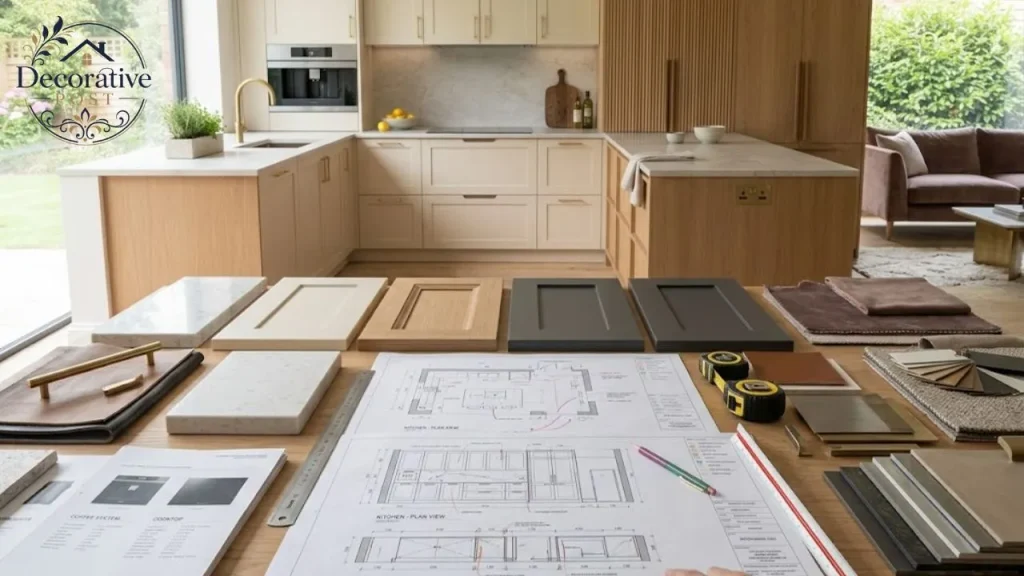
Take these questions to your consultation:
- What exactly is the cabinet box made from?
- What are the drawer boxes made from?
- Which hinges are included?
- Which drawer slides are included?
- Are the hinges adjustable?
- Is soft-close standard?
- What finish is used?
- How should the finish be cleaned?
- What does the warranty cover?
- What happens if a component needs replacing?
- Which panels and fillers are included?
- Is installation included?
- How are measurements verified?
- What certifications or testing apply?
- Which features shown in the showroom cost extra?
The answers can reveal more than the sample door.
A Simple Rule for Choosing Modern Cabinets
If you remember only one thing, make it this:
Choose the cabinet style that makes your kitchen easier to use and easier to live with, then make it beautiful.
A sleek cabinet that creates poor storage isn’t a successful modern design. A fashionable finish that you dislike after two years isn’t a successful purchase.
A simple cabinet with excellent proportions, good hardware, thoughtful storage, and a finish you genuinely enjoy can remain attractive for much longer. That is the real advantage of modern cabinetry. It doesn’t need to shout. It needs to work.
Final Takeaway
The best modern kitchen cabinets aren’t defined by one door profile, one color, or one material. They are defined by thoughtful choices. Simple doors can create a calm background. Natural wood can add warmth. Tall storage can use forgotten vertical space.
Deep drawers can make everyday cooking easier. Integrated appliances can reduce visual clutter. Good hardware can make inexpensive-looking frustrations disappear. And none of those choices need to be made in isolation. Look at the room as a whole. Consider how you move through it.
Think about what you touch every day. Inspect the cabinet construction rather than relying on photographs. Then choose the finishes that make the space feel like your home.
That approach will give you something more valuable than a kitchen that simply looks modern today: a kitchen that continues to make sense after the trend cycle has moved on.
Frequently Asked Questions
What are the best modern kitchen cabinets for a timeless look?
Flat-panel, simple Shaker, natural wood, warm white, and muted neutral cabinets are among the most adaptable choices. Their simple profiles make it easier to update hardware, lighting, and accessories later.
Are slab cabinets still popular for modern kitchens?
Yes. Slab doors remain a strong choice because their uninterrupted surfaces create a clean appearance and work well with wood, matte finishes, integrated appliances, and minimalist hardware.
What is the difference between modern and contemporary kitchen cabinets?
Modern cabinetry generally emphasizes clean geometry and minimal ornamentation, while contemporary cabinetry refers more broadly to current design preferences. The two styles often overlap.
What cabinet finish is easiest to live with?
There isn’t one universal answer. The best finish depends on household use, cleaning habits, lighting, and the manufacturer’s specifications. Physical samples are more reliable than online photographs when comparing finishes.
Do modern kitchens need matching upper and lower cabinets?
No. Using different finishes can add depth and warmth. For example, painted wall cabinets paired with natural wood base cabinets can create contrast while maintaining a cohesive design.
Are dark modern cabinets a good idea for a small kitchen?
They can work, but lighting becomes especially important. Pairing dark cabinetry with lighter countertops, reflective surfaces, and good task lighting can prevent a compact kitchen from feeling too heavy.
What makes modern cabinets look expensive?
Consistent door alignment, narrow reveals, quality hardware, carefully chosen materials, good lighting, and professional installation often have more visual impact than expensive decorative details.
How can I make modern cabinets look warmer?
Introduce natural materials and softer tones. Oak, walnut, warm stone, textured tile, aged metal, warm lighting, and cream or earthy cabinet colors can soften an otherwise minimalist design.