

A successful home bar is not defined by how many bottles it displays. It is defined by how naturally it fits the room and how little effort it takes to use. That distinction matters. A dramatic backlit wall may photograph beautifully, yet a modest cabinet near the dining table can be far more useful.
The best home bar ideas begin with everyday behavior: what you serve, how often you host, where guests gather, and how far you want to carry ice, glasses, and dirty tools.
This guide moves from those decisions to layouts, measurements, materials, storage, lighting, and installation. Use it to design a drinks station that still feels sensible after the novelty wears off.
Dyelor Pets is a pet-focused website sharing helpful guides, care tips, product reviews, nutrition advice, and practical information for dog and cat owners. Discover useful resources to help your pets stay healthy, happy, and well cared for.
Choose the format before you choose the finish
The first decision is not cabinet color. It is how permanent and self-contained the bar needs to be.
| Format | Best for | Main advantage | Main limitation |
|---|---|---|---|
| Bar cart | Renters and occasional hosts | Movable and inexpensive | Limited prep and concealed storage |
| Console or sideboard | Dining and living rooms | Looks like normal furniture | Usually lacks refrigeration and water |
| Freestanding cabinet | Small homes needing closed storage | Hides visual clutter | Fixed internal layout |
| Built-in dry bar | Frequent hosting near a kitchen | Integrated appearance without plumbing | Requires cabinetry and electrical planning |
| Wet bar | Basements or entertainment rooms far from a sink | Convenient rinsing and preparation | Higher installation complexity |
| Seated bar | Large rooms and social entertaining | Creates a gathering point | Consumes significant circulation space |
A dry bar is simply a serving and storage area without a plumbed sink. It can still include a refrigerator, countertop, lighting, and generous cabinetry. For many homes, that is the sweet spot: most of the convenience without opening walls for water and drainage.
A wet bar earns its cost when the space is far from the kitchen, drinks require frequent rinsing and preparation, or the bar also functions as a kitchenette. If the kitchen sink is ten steps away, plumbing may add more expense than value.
Design for the way you actually host
Before measuring cabinetry, inventory what you use during a normal evening—not what looks impressive in a showroom. A cocktail-focused setup needs a durable prep surface, tool drawer, ice access, upright bottle storage, and a place for citrus and waste.
A wine station benefits more from controlled storage, suitable glassware, a corkscrew drawer, and a clear pouring surface. Beer and soft-drink service may require little more than cold storage and a tray. Families can treat the area as a broader beverage station.
Keep alcohol in lockable storage while giving children easy access to water glasses, soft drinks, or snack supplies. Coffee equipment can share the bar if the counter has suitable power, heat clearance, and enough room to prevent morning and evening items from becoming one permanent pile. One useful test is to describe the entire serving journey:
- Take out a glass.
- Retrieve the drink.
- Find ice or an opener.
- Prepare and serve.
- Return used items.
- Wipe the surface.
If those steps require repeatedly crossing the room, the layout is decorative rather than functional.
Home Bar Ideas for Every Room and Footprint
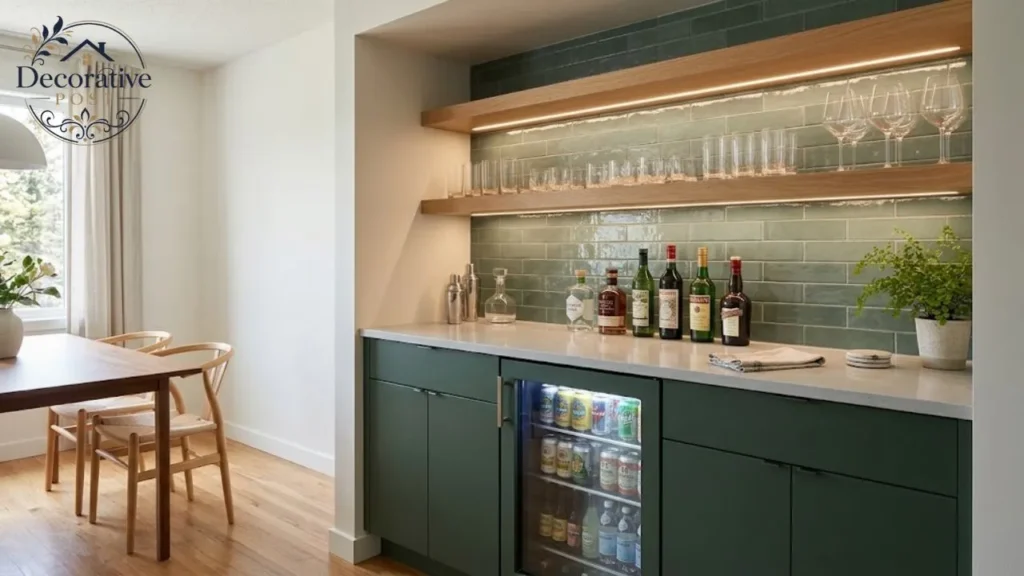
Turn an alcove into a one-wall dry bar
An alcove is often the most convincing location for a built-in because the surrounding walls make shallow cabinetry feel intentional. Use base cabinets for heavy bottles, a clear counter for preparation, and upper shelves or cabinets for glassware.
Run the backsplash to the underside of the upper storage. This creates a complete visual composition and protects the wall from splashes. If the alcove is narrow, reflective tile or antiqued mirror can increase the sense of depth, though a mirror also reveals every bottle and fingerprint.
Convert a closet into a hidden bar
A shallow closet can become an excellent concealed station. Doors let the room return to normal when the bar is not being used, which suits living rooms, offices, and multipurpose spaces.
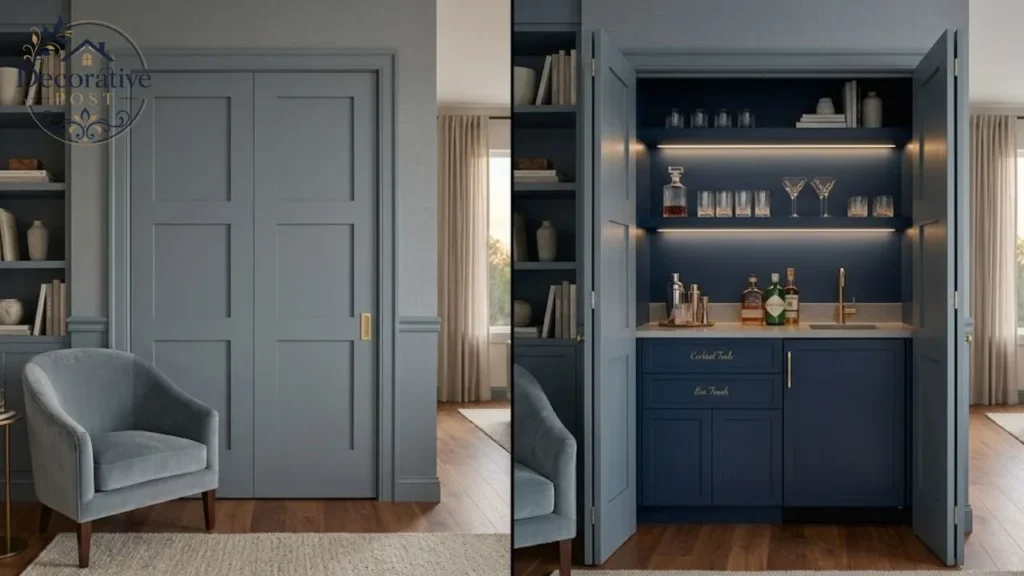
Confirm that the open doors will not obstruct a walkway. Add internal lighting that switches on with the doors, and use a pull-out work surface if the fixed counter is too shallow. Never place an appliance in a closed cabinet unless its ventilation requirements are satisfied.
Use a sideboard rather than a traditional bar cart
A sideboard offers a wider worktop, drawers for tools, and cabinets for bottles. It also looks settled rather than temporary. Place bottles on a tray to contain drips.
Use the wall above for a mirror, artwork, or two well-anchored shelves. If the furniture is vintage, verify that its top can tolerate moisture and that tall, heavy pieces are secured against tipping.
Build a quiet dining-room drinks cabinet
A dining-room bar works best when it behaves like part of the architecture. Match the cabinetry’s door style or wood tone to another element in the room, but allow the interior to be more expressive.
Deep color, patterned tile, or warm metal can give the open cabinet a jewel-box effect. Closed doors also reduce visual noise. That is especially valuable when the dining room is visible from the entrance.
Put a compact station under the stairs
The sloping wall naturally creates zones: taller refrigerator and bottle storage at the high end, drawers or low cabinets where headroom falls.
Avoid forcing shelving into the narrowest point simply because space exists. Inaccessible triangular cubbies quickly become dust traps. Check that the staircase construction permits the proposed fixings and services before opening walls.
Add a furniture-style bar to the living room
A bar in a living area should complement the room rather than imitate a commercial pub. A cabinet with pocket or bifold doors can reveal lighting, glassware, and a compact counter, then disappear after use.
Choose a quiet beverage refrigerator if seating is nearby. Compressor noise that seems minor in a showroom can become irritating during conversation or television viewing.
Give the basement bar more than one purpose
A basement bar can support movie nights, games, snacks, and everyday family use. This broader role justifies storage and refrigeration better than a room reserved only for cocktails.
Below-grade spaces need additional scrutiny. Resolve moisture and ventilation issues before installing millwork. Water-resistant finishes cannot compensate for an active damp problem.
Create an outdoor serving point without treating it like an indoor kitchen
For a covered patio or garden room, specify products rated for the actual exposure. Indoor cabinets, standard power strips, and ordinary refrigerators are not automatically safe outdoors. Plan shade, weather protection, drainage, and secure storage. In cold climates, plumbing may also require seasonal shutoff and winterization.
Make a renter-friendly wall station
A slim console, tray, portable lamp, and nearby cabinet can create a complete serving zone without construction. Use removable organizers inside drawers and keep the most attractive bottles or glassware visible.
Do not overload floating shelves or rely on adhesive fixings for heavy glass. A freestanding bookcase anchored according to its manufacturer’s instructions is often the safer option.
Design an alcohol-free bar with equal care
A home bar does not have to revolve around spirits. Tea, coffee, sparkling water, syrups, shrubs, juices, and specialty glassware can form a sophisticated beverage station.
This approach is useful in family homes and for hosts with mixed preferences. It also encourages the space to be used throughout the day rather than only during parties.
Measurements that protect comfort
Dimensions should be treated as planning ranges. Cabinet systems, user height, accessibility needs, appliance specifications, and local requirements can change the final design. A standing bar counter is commonly around 40 to 42 inches high, while standard kitchen-counter height is about 36 inches. Match stools to the actual finished counter, not the product name.
A comfortable difference between seat and counter is commonly around 10–12 inches. Allow roughly 24 inches of counter width per seated person as a starting point. Larger stools, arms, swiveling seats, and frequent movement may require more.
Behind occupied stools, generous circulation is preferable; test the layout with chairs and taped floor lines before ordering anything. Base cabinetry is often approximately 24 inches deep. A simple drinks cabinet may be shallower, while a seated counter needs enough overhang for knees and adequate structural support.
Countertop fabricators and cabinetmakers should determine support requirements for stone or extended overhangs. Shelf depth should follow the objects stored. Glassware needs less depth than appliances or large bottles. Excessively deep upper shelves encourage double rows, hiding whatever sits behind.
Storage: display less and retrieve more easily
Open shelving looks light and provides quick access, but it exposes glassware to dust and cooking residue. Near a kitchen, at least some closed storage is usually worthwhile. Keep heavy bottles low. Reserve eye-level shelves for frequently used glassware and a small edited display.
Drawers are ideal for corkscrews, strainers, napkins, coasters, and measuring tools because they prevent small equipment from spreading across the counter. Wine deserves particular care. Heat, vibration, and direct sunlight are poor storage conditions.
A decorative rack beside a sunny window may be suitable for bottles consumed quickly, but it is not serious long-term storage. Lockable cabinets should be considered where children can access the room. Cleaning chemicals, sharp tools, and breakable glass may need the same treatment as alcohol.
Lighting should help you pour, not merely set a mood
A good bar uses at least two lighting layers:
- Task lighting over the counter
- Soft ambient or accent lighting around shelves or cabinetry
Place linear LEDs toward the front of a shelf or cabinet underside so they illuminate objects rather than create a bright strip at the back. Use diffusers to avoid visible dots reflected in glass and polished stone. Warm light generally flatters wood, brass, amber liquids, and evening interiors.
High-quality color rendering helps ingredients and finishes look natural. Dimming is more useful than chasing an unusual color-changing effect. Plan switches and drivers where they remain accessible. A failed driver sealed behind finished cabinetry turns a minor replacement into a repair job.
Choose materials for spills, heat, and fingerprints
Bar counters encounter citrus, wine, water, sticky syrups, and metal tools. Nonporous or properly sealed surfaces simplify cleaning. Quartz, porcelain, stainless steel, and many compact surfaces can perform well, though every material has manufacturer-specific limitations.
Natural stone offers variation and character but may require sealing and prompt spill cleanup. Wood adds warmth and can be repaired, yet standing water around a sink demands careful detailing and maintenance. Highly polished dark surfaces reveal fingerprints.
Textured tile backsplashes create visual interest but may have more grout or uneven areas to clean. Select finishes after considering who will maintain them. A raised edge, tray, or removable mat beside the mixing area can prevent small spills from reaching timber floors or valuable furniture.
Spend first on the things that are difficult to change
Among all home bar ideas, the strongest investment strategy is surprisingly unglamorous. Prioritize:
- Correct location and circulation
- Safe electrical and plumbing work
- Durable cabinetry and hardware
- A practical work surface
- Suitable refrigeration
- Effective lighting
- Decorative finishes
- Accessories
Wallpaper, paint, handles, trays, and glassware are easy to update. Poor outlet placement, undersized refrigeration openings, and awkward counter depth are not.
Before buying an appliance, read its installation manual. Built-in, under-counter, and freestanding units can require different airflow. Leave access for servicing and verify that doors can open fully without striking walls or handles.
Common mistakes that make a bar frustrating
Designing from one photograph
A photograph hides circulation, outlet placement, appliance noise, and what sits outside the frame. Borrow the visual principle, not the plan.
Filling every shelf
A fully stocked display often reads as clutter. Leave breathing room and store duplicates behind doors.
Installing a sink without a clear reason
A sink adds a faucet, drain, supply lines, waterproof detailing, and more coordination. Use it when it genuinely improves the workflow.
Forgetting waste and used glassware
Provide a small bin and a landing place for used items. Otherwise, the attractive preparation counter becomes the cleanup zone halfway through the evening.
Using only mood lighting
Dark shelves create atmosphere but make labels and tools difficult to see. Add discreet task lighting.
Buying too many specialized glasses
Start with glassware suited to what you regularly serve. Expand after actual use reveals a need.
Letting the theme overpower the house
A bar can have more personality than the surrounding room, but it should still share a material, color, or architectural detail with it. Literal pub signs and novelty décor age faster than good cabinetry, lighting, and art.
A practical planning sequence
Start by photographing and measuring the proposed location. Mark doors, vents, radiators, outlets, switches, and walking routes. Next, list equipment and inventory. Include bottle heights, glass quantities, appliances, tools, waste, linens, and anything that must be locked.
Choose wet or dry service only after mapping the route to the kitchen. Then obtain appliance specifications and determine electrical, plumbing, ventilation, and lighting needs. Mock up the footprint with painter’s tape and boxes. Open nearby doors. Pull out a stool. Walk past it carrying a tray.
This simple rehearsal exposes problems that plans often conceal. Finalize cabinetry after infrastructure and appliances are known. Select decorative materials last. Before installation, confirm requirements with the relevant licensed professionals and local authority.
The most enduring home bar ideas do not try to recreate a nightclub or hotel lounge. They make serving simpler, give useful objects a proper place, and add a small moment of ceremony to an ordinary evening. Build for that experience, and the room will feel special without becoming theatrical.
Frequently Asked Questions
What should every home bar include?
At minimum, provide a clear serving surface, secure bottle storage, suitable glassware, basic tools, task lighting, coasters, and a place for waste or used items. Refrigeration and a sink are conveniences, not universal requirements.
Does a home bar need a sink?
No. A dry bar is often sufficient when the kitchen is nearby. A sink becomes valuable in a basement, guest suite, or entertainment room where carrying glassware and water back to the kitchen is inconvenient.
Where is the best place to put a home bar?
Choose a location near where people naturally gather but outside the main walking path. Dining rooms, living-room alcoves, basement lounges, unused closets, and spaces near the kitchen are strong candidates.
How do I create a bar in a small home?
Use a bar cart, sideboard, narrow cabinet, closet, or shallow alcove. Prioritize a usable worktop and closed vertical storage rather than trying to fit stools or several appliances.
How can I make a home bar look more expensive?
Use restrained materials, warm integrated lighting, consistent hardware, an uncluttered countertop, and one strong focal element such as art, tile, or wallpaper. Careful alignment usually looks more luxurious than adding more decoration.
What is the difference between a wet bar and a dry bar?
A wet bar has a plumbed sink; a dry bar does not. Both may include cabinetry, refrigeration, lighting, and a preparation surface.
Are home bar ideas suitable for families who do not drink alcohol?
Yes. The same cabinetry can support coffee, tea, sparkling water, mocktails, snacks, or dessert service. Lockable storage can separate adult items from family-accessible supplies.